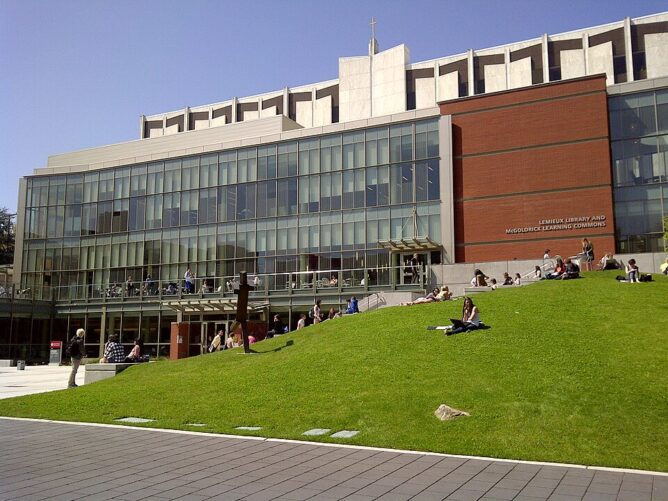
outside of the Lemieux Library building with grassy lawn in foreground

News and announcements 

🤖✊🏼 Sarah Watstein, Dean of the Lemieux Library at Seattle University, has another post in her ongoing series exploring artificial intelligence and Pope Leo XIV’s 2026 encyclical, “Magnifica Humanitas.” In it, she questions and reflects upon the meaning of the phrase “AI for the common good,” something which the American Library Association refers to in its recently published guidelines on the use of AI in libraries. It’s encouraging to see library leaders practicing discernment on this issue, and I would expect no less from a leader at a Jesuit institution. 

✒️📑 Boston University Libraries is celebrating the grand opening of the Nikki Giovanni Papers. In addition to the exhibition, “Poetry is the Culture of a People,” BU Libraries will host a reception, a film screening of “Going to Mars: The Nikki Giovanni Project,” a discussion with the filmmakers, and a poetry reading. While the exhibition focused on the first 10 years of Giovanni’s career, the collection includes photographs, journals, manuscripts, artworks, personal and professional correspondence, professional records, memorabilia, drafts of poetry, and other writings. The collection is the result of an ongoing relationship between the poet and BU that began in 1970.

🦠🎞️ In this donor-funded contest, Indiana University students are invited to use images from IU Libraries’ Moving Image Archive to create a “short, compelling video about the importance of good health practices that help prevent illness and promote collective care within the community.” This is the program’s fourth year and the top prize received $2,000. It is not lost on me that this project began just a year after campuses began returning to in-person classes post-COVID. What an amazing way to promote community health and explore digital collections!

5️⃣🧑🏽‍🏫 The ZSR Library at Wake Forest hosts an early career workshop series for faculty. “First Five” is open to faculty within their first five years at WFU and covers topics including finding resources for courses, designing research assignments around AI, evidence synthesis, and open access publishing. What an amazing resource for new colleagues that would be a relatively low lift for any university library team to create!

🐝🍫 Three library school interns are conducting a deep dive into UC Davis Library’s agriculture and food and drink collections using data-driven assessment methods to determine its scope and strength. The first post, by Mei Chin, explores bees and honey (and also mead. Yum!). The second post explores chocolate and cacao. The next post(s) will explore tea and beer. As part of the analysis, the interns are identifying peer institutions with similar collecting strengths. What a great project for a new MLIS student!

📖🆓 Finally, a little bit of self promotion here. A group of librarians at Loyola Marymount University and Saint Mary’s College of California published a free and open toolkit for “Growing Your OER Program.” The book, published on Pressbooks, contains practical guidance for growing OER awareness, OER marketing and promotional materials, and frameworks and templates for self-advocacy within the reappointment, promotion, and tenure process. The templates can be used to promote OERs to faculty, students, and administrators. 

Notable mentions 

  • UNC Chapel Hill’s Wilson Library shows off it’s 500-year old copy of the Odyssey.
  • In the real world, the 1817 voyage of the USS Ontario to the mouth of the Columbia River is recounted in a logbook owned by SMU Libraries.
  • Indiana University hosted BINGO with the dean for grad students
  • Tired of having to “deal” with AI in your everyday creative work? Rowan University Libraries hosts an “Avoiding Unwanted AI” workshop.
  • Cornell University Library is expanding its Critical AI Literacy Program.
  • After long last, the new Carrier Library is open at James Madison University. (video above)
  • The names and stories of more than 4,500 Georgians who were enslaved can now be discovered thanks of the University of Georgia Libraries.
  • The University of Cincinnati Libraries’ Student Innovation Grant provides funding for students to explore ways to expand the library’s impact.

On social

The “Kinda chic” trend was undoubtedly the most popular meme to emulate this past month, with dozens of libraries jumping on it, including University of Buffalo, Marriott Library, UNF Libraries, Western Carolina, DePaul University, University of Hawaii Mānoa, and University of Michigan Law (above). This style of “pretty library photo + text” meme regularly tends to gather speed among AcadLibs and reminds me of past trends like “This and…” 

As much as I love the quiet focus that summer time brings to the academic library, it’s just not the same when the students and faculty are all away. A library is nothing without its people. So it’s no surprised the “we missed you so we drew you in” meme took off across both university main channels and libraries themselves. Here’s one from University of North Florida, Salisbury University, BYU Idaho, Central Oklahoma, and my own library at Loyola Marymount University

Finally, a few notable posts worth mentioning:

@gvsulib

BOOKMARK CHALLENGE IS BACK! Submit your design(s) from August 12 through September 5, 2026 – then come back September 6th and vote on your favorite! The top three vote getters will be printed and handed out at the library service desks for the academic year. Winners announced on September 11! HOW TO ENTER 1. GET THE TEMPLATE! You can download the bookmark template or stop by any library location to pick up a printed template sheet! The bookmark is 6 inches by 2 inches, vertical layout, if you want to measure it yourself!) 2. DESIGN! Create your bookmark design! You can draw or collage, go analog or digital – just make it your own! 3. SUBMIT! Upload your design online or drop it off at a library location to enter. Hi-resolution scans are preferred to photos! (If in doubt, drop it off and we can scan it for you.)

♬ Small Change – DON WEST

banner image: Lemieux Library, Seattle University (source)

black and white photo of Bacon Hall, and large brick building with three main sections, and a large tower in the center

News and announcements 

🤖 Every academic library is struggling with the question of how to approach artificial intelligence, especially within the context of information literacy and research. So I applaud any library that has the fortitude and focus to develop an AI strategy. The Lemieux Library at Seattle University has created “an intentional, structured response to the challenges and opportunities we face in assessing, integrating, using and supporting artificial intelligence.” This statement sits alongside their vision statement, their EDI action plan, and other documents that outline the general mission of the organization. I don’t believe that AI will always always occupy a special place alongside our core strategic documents, but it’s a good place for time being. 

📞 When I was in college, there was a help desk you could call to ask research questions, but that’s not what they were known for. They had a reputation for being able (or at least willing) to answer ANY question you threw at them. So it could be something related to financial aid, or it could be “how many Hummers could I fit inside the football stadium.” Their student staff were trained to diligently try to answer anything. The new “Answer U” service at the J. Willard Marriott Library reminds me somewhat of that: a one-stop shop for college students to get answers to any questions about the college experience. Though maybe not as silly as my experience would suggest, I like this idea of academic libraries functioning (from a service point of view) more like public libraries do for their communities. 

🔋 Now this is cool. Yale Library’s Environmental Monitoring Data Project is gathering data about the display and storage conditions for its cultural heritage collections. The collected data will help the library refine its energy consumption levels. Instead of a using a one-size-fits-all climate system to what amounts to acres of collections storage, the EMDP recognizes that some objects may tolerate less-energy-dependent environments. This project is a university-wide collaboration of conservators, IT experts, and collections and facilities staff.

📝 Rutgers University Libraries is helping researchers make sense of the rapidly evolving intersection of copyright law and generative AI. They provide a practical overview of how countries are approaching AI regulation, highlighting debates over text and data mining exceptions, compulsory licensing, voluntary licensing agreements, and the use of fair use as a legal justification for AI training. As they emphasize, the legal frameworks remain unsettled worldwide, with more than 150 AI-related lawsuits already filed globally, most of those in the U.S.

📚 Ann Glusker from UC Berkeley Library wrote about an oral history project documenting how librarians have adapted to decades of technological and organizational change. The “Librarians Navigating Change” project features interviews with long-serving UC Berkeley librarians, showing how library work evolved alongside changes to information technologies and campus needs. Glusker highlights interesting finds, like a 1991 notebook of training handouts from Berkeley’s Moffitt Library. The collection serves as a time capsule of library services before the web, featuring guides for CD-ROM databases, dial-up catalog access, early online searching, and more. (Hm, I should do digging like this in my own university archives!)

Notable mentions 

On social 

Maybe it’s just because I’m a millennial, but the Tulane University Libraries’s take on the Oregon Trail brought back deep childhood trauma. Consider me overly citation-cautious now. I don’t want to see my name on a tombstone!

Aside from the trends I mentioned in my previous post, AcadLibs were all over the memesphere this month. We had: 

But of all the content this month, it was this post from Hampden-Sydney College Library that made me laugh out loud because… well, it me. I feel the exact same way every time I go into the special collections vault.

@hscbortzlibrary

It’s not everyday that the instruction librarian gets to go into the archives. #archives #trending #library #treasure

♬ original sound –

banner image: “Bacon Library, 1901”, retrieved from Calisphere

Social media happens so fast. I mean, just a couple weeks ago, none of us had considered that we could be asked to be in a Netflix documentary. So in between the monthly “Recently in Academic Libraries” posts, I pull together regular updates on what AcadLibs are doing on social. Please enjoy these recent highlights.

When I said last month that I had not seen academic libraries rally around a viral trend the way they rallied around the Backrooms in some time, I did not know the Netflix documentary meme was coming. Many libraries did their own takes, but UVU Library, true to their form as the GOAT of all AcadLibs on social, delivered what is, in my opinion, the chef’s kiss of this trend. I’ve watched it a dozen times and it never gets old.

@uvulibrary

Librarians may not know what it’s like to be wrong…but on the rare occasion that we don’t know an answer, we’ll help you find the right information! Whether you’re stuck on a research topic, can’t find a credible source, or are confused by citations, we’ve got you. Make an appointment today via our website, or stop by the first-floor Research Help Desk. #UVU #Library #Documentary #Trend #Academia

♬ original sound – Fulton Library at UVU

If you’re like me, you’ve been living and breathing World Cup for the past month. We’re a few days away from the final match, and libraries have been leveraging the beautiful game to promote policies, spaces, and staff. UT Arlington Libraries used a soccer ball to take a tour of its campus. Riccardo from SJSU Library gave us a tour of the library without dropping the ball! LSU Libraries explained what might get you a red card in the library (though, not off sides). And then the University of Florida Libraries had this banger.

Finally, in the “fun and unique” category, we’ve got William & Mary Libraries asking staff to try and guess how many books they think their colleagues have read this year (oh my goodness, 145 books!!!). A good reminder that asking simple questions to a handful of your colleagues can always make good, low-lift content.

black and white photo of student back diving off a dock into the water. Other students on the dock with boat in background.

News and announcements 

If, like me, you work at a Jesuit or Catholic institution, everyone has been talking about the Pope’s recent encyclical on artificial intelligence. Seattle University was the first academic library that I noticed to post on the topic. Their first post frames the document as a call to centering human dignity over technological efficiency; and it asks us to think critically about how AI is reshaping education and work. It’s somewhat of an orientation piece. The follow up post explores one of the encyclical’s most poignant themes: “digital slavery,” outlining how AI often relies on hidden labor (e.g., data labeling and moderation), exploits personal data in ways likened to “digital colonialism,” and depends on harmful supply chains for materials like rare earth minerals. We need more critical analysis of AI like this in higher education.

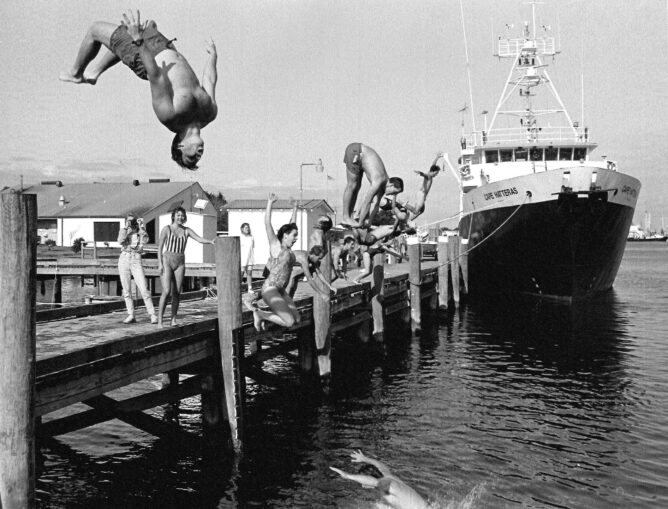
A Duke University Libraries post by two student interns takes us on a deep dive (haha) into their Marine Lab archives, where students have been digitizing materials that capture more than a century of marine science research and campus life. Along the way, they’ve uncovered everything from early 20th‑century studies of crustaceans to mid-century lab bulletins and quirky glimpses of scientific life on the North Carolina coast. Equal parts history lesson and archival adventure, it’s cool to see this type of labor and reflection get surfaced (see what I did there?).

The University of Ottawa and Vanderbilt University have established a new partnership focused on advancing Indigenous digital archives and mobile history research. The collaboration emphasizes Indigenous-led knowledge preservation, prioritizing community engagement, data sovereignty, ethical stewardship, and reciprocal knowledge exchange. The partnership reflects a shared commitment to preserving Indigenous histories and also building long-term, respectful relationships between universities and the communities that build knowledge.

The University of Utah’s Indigenous Storytelling Camp marked its 10th anniversary, having grown from 27 participants to nearly 100 Indigenous middle and high school students from across the region. The week-long program brings students to campus to create stories using various media, e.g. podcasting, photography, mural-making, and animation, while also introducing them to college life and library resources. The library provides makerspace tools, instruction, and a welcoming environment, but it sounds like it’s a truly interdepartmental initiative, bringing together over a dozen campus units. 

Really love this idea: DePaul University Library expanded their collections by purchasing nearly 200 books and 50 vinyl records from local independent businesses, as part of a broader commitment to support the Chicago economy and align with the university’s mission. The program prioritized in-person selection, allowing staff to browse with input from store employees, respond to patron requests, and quickly add materials to the collection (and avoiding long shipping times). The team focused on finding items with local connections, including works by Chicago-based creators.

Notable mentions 

Twelve students standing in front of a mural showing one large female face on left, a tree on the right, with rays of light streaming from it.
  • A conservation study at Northwestern University Libraries analyzes red inks in West African manuscripts.
  • Seton Hall University Libraries has a brief World Cup guide.
  • In another life, this would be my job. UC Davis has a wine writer in residence.
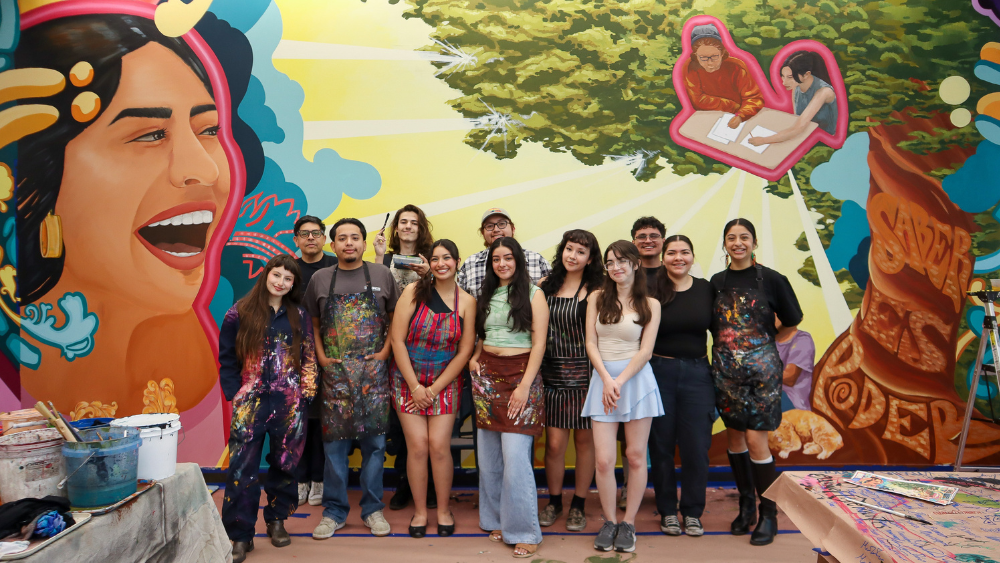
  • And speaking of UC Davis they have a new mural! (seen above)
  • Wake Forest is still helping students critically find, evaluate, and use information, but with AI now in the mix.

Finally, it’s Pride Month! So a number of libraries posted recommended resources on LGBTQ+ collections and research, including: Villanova, Fordham, Loyola Chicago, Seton Hall, Loyola Marymount, Emory, Wayne State, Binghamton, and University of Utah.  

On social

images of typed letters arranged in a grid

News and announcements 

🪑🥤🖥️ Drexel Libraries hosted a student-curated exhibition of everyday objects from university dorm rooms, “Dorm Objects 101.” Most of the objects on display, photographs, and labels came from about 70 students who took either a “Visual Culture” or “History of Modern Design” class. The university loaned standard-issue furniture to be included as well. Some of the photographs came from greek life scrapbooks and handbooks from the University Archives. What I love most of all, some of the student contributors also served as docents leading tours of the exhibition. 

🤖📚🤔 The “AI Framework” from ZSR Libraries at Wake Forest has to be one of the most thoughtful and insightful policies that I’ve seen come out of an academic library to date. The framework— which includes an Engagement Framework, a Values Statement, and a Guide to Using AI— was the result of an AI Engagement Task Force. As Dean Lauren Pressley writes: “The Values Statement names the foundation. The Framework translates that foundation into eight engagement principles. The Guide takes those principles into the texture of everyday decisions.” 

📚📚📚 The nearly 18,000 books once owned by Pulitzer Prize-winning author Cormac McCarthy are currently being cataloged by University of Tennessee Libraries. McCarthy was a Knoxville native. Processing the collections is expected to take around 10 months, but once it is publicly available, will be an invaluable resource for scholars of McCarthy’s works. Not all the books, however, went to UT Libraries. A couple thousand with annotations went to Texas State University at San Marcos.

📖🪡✂️ The Dartmouth Libraries Book Arts Workshop partnered with a geography professor to design a course in which students create a handmade book about a chosen city. Students used the medium to highlight social justice issues, like redlining and gentrification. This tactile approach increased student engagement with the research. As one student noted, “I had to be more thoughtful and intentional about what I wanted to communicate as a result, and I was conscious to try and design a progression of pages that—whenever possible—show before telling.”

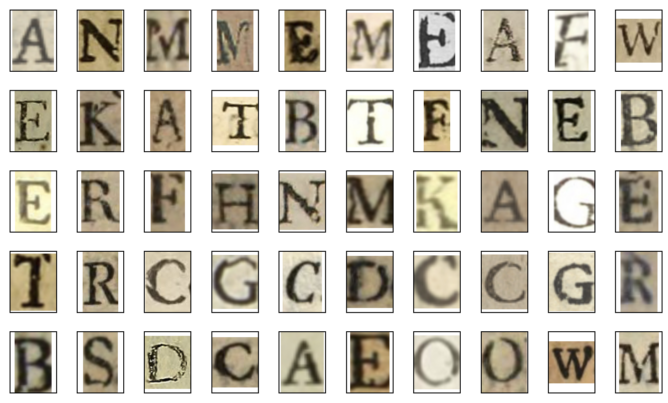
📜🕵️🤖 Now this is a usage of machine learning that I can get behind. The University Libraries at Carnegie Mellon University partnered with their college of humanities and social sciences to create the Catalog of Distinctive Type, a digital resource that helps identify letterpress printers. By digitizing 20,000 individual letters from more than 240 printers in 17th century London, scholars can use machine learning to help identify unique characteristics (like errors in the type) that will help uncover the identity of unattributed works. (sen above)

Notable mentions 

printing plates housed in corrugated box with custom corners holding them in
Housings for Northwestern University Libraries printing plates 

On social 

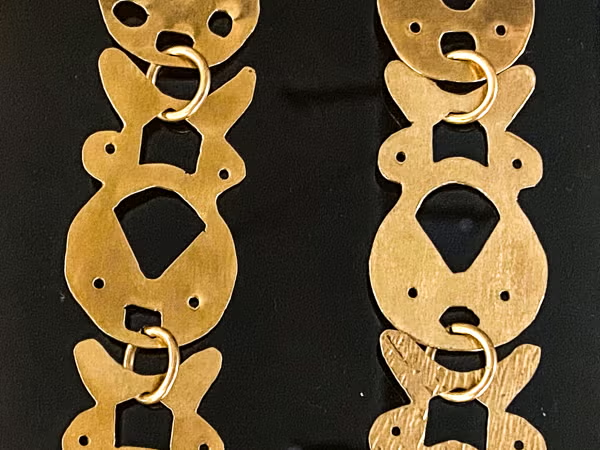
two golden chains

News and announcements 

✈️💰 Lemieux Library at Seattle University offers travels awards to students. This is for students who have been accepted to present at a professional or scholarly event, including academic conferences, film festivals, etc. Students can receive up to $1,000 for travel expenses. The students are also asked to present a  poster or give a presentation. It’s wonderful to see a library supporting students’ academic success in this way. 

🪡👨🏼‍🦳 The University of Arkansas’s Mullins Library is launching a new series called “Granny Camp,” which is designed to foster a learning of practical skills (e.g. sewing craft) and encourage intergenerational dialogue. They provide the space and the snacks, and guests are encouraged to drop in as their schedules permit. What an amazing way for a campus to engage with the local community!

📼📸 Tulane University has published a new collection on early 1970s New Orleans Mardi Gras Indians for public research. The collection includes reel-to-reel and cassette tapes, photo negatives, research notes, and other materials that were collected as part of a dissertation project. “While the materials are preserved and made accessible by [Tulane Libraries], cultural authority remains with the tribes and individuals represented.”

🗿🏺 The “Re/Make History: Crafting the Past with 21st-Century Technologies” exhibition at Penn Libraries invites students to seek inspiration from archeological artifacts and rare books in order to make contemporary works of art, including earrings, chains (seen above), sculpture, toys, and even chocolates. In one notable example, the program coordinator used ChatGPT to help imagine a 3D model of a 2D image, which was then further refined by hand and in consultation with other sources. It’s a wonderful example of combining technology, art, craftsmanship, and research.

🤖📚 You can’t escape library news about artificial intelligence, so here’s a lightning round: The University of Virginia has launched the Statement of Shared Practice for libraries who want to address AI training requests of their unique archival and cultural heritage materials. Northwestern University received a $500K grant to transform an extensive collection of environmental impact statements into a dataset that can be analyzed through a new AI agent framework. Stony Brook University Libraries is launching a new course on critical data and AI literacies. Oh, and they are putting AI into library robots

✏️🗺️ File under: “coolest idea of the month.” UW Wisconsin-Madison Libraries is hosted a “study crawl” for finals. The day-long event encourages students to take study breaks across campus at multiple library locations. Along the way, they can earn merch and win prizes. This seems like an event that would also work well by including campus partners, like the writing center or student health services. 

Notable mentions 

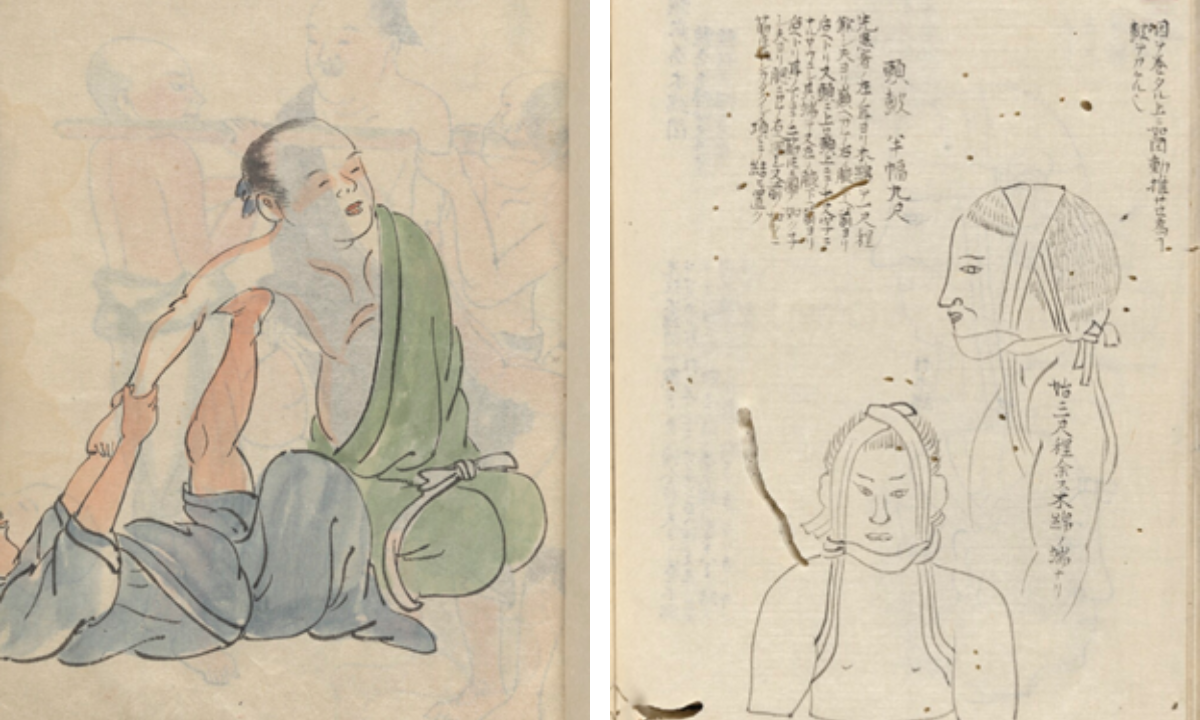
On left, illustration of a man using his arm and leg to pull an another man's arm. On right, two illustrations of a man with head and chin wrapping.

Finally, a number of libraries celebrated Earth Month, including Duke University, CalTech, University of Utah, St. Thomas, Villanova, and Catholic University of America. And let’s not forget National Library Week: Wake Forest, University of Cincinnati, SMU, CSU Fullerton, and UMBC, just to name a few.

On social 

Librarians are the mavens of undoing misinformation. With the rise of AI generated content, I’ve seen a number of content creators take on the mantle of “truth-discerners.” But even users of traditional platforms still need help sussing out hype from reality. Which is why I enjoyed this video from Penn Libraries of librarians responding to study tips found on Reddit.

Maintaining the university archives is one of the most important roles that an academic library plays in its community. I’ve often said that if I wasn’t an outreach librarian and I could start over, I would want to be a university archivist. Which is perhaps why I enjoyed this video from the University of Maryland.

What could you discover with the right tools and the right experts? The University of Vermont is hosting a research fair to promote its services. So bring in a creepy cat

This never gets old. I knew what was going to happen and I still did it anyway and I still laughed. Thank you, Wayne State.

Social media happens so fast. I mean, just a couple weeks ago, none of us had ever imagined what 12 tons of KitKats looked like. So in between the monthly “Recently in Academic Libraries” posts, I pull together regular updates on what AcadLibs are doing on social. Please enjoy these recent highlights. 

The Bass Library at Yale created (appropriately) a bass-based wayfinding strategy. The libraries at the University of Georgia was forcing students to compete in Beast Games to reduce late fees. While Drexel went all digital and emptied their shelves. At Beinecke Library, there is now a pool open to registered researchers. William & Mary was offering students the opportunity to check out library narrators

Fondren Libraries wants us to think the library whiteboards are all empty during finals.  UCSB replaced all its furniture with its famous red booths. The University of Albany Libraries has a new intern. And in what is perhaps my favorite post, Clemson Libraries did a reverse Uno on its noise levels.

Oh but wait, there’s more. Virginia Tech Libraries is getting a lazy river, cat cafe, and karaoke floor. UNF has a new self checkout station. Trexler Library has a fun way to get to level 1. The University of Oregon has pet checkouts. Similarly, Sacred Heart University has goats. Syracuse threw in some local university history into its post about school colors. And finally, Beloit has [research] rats. Happy April Fools to all who celebrate. 

page from Ortelius showing map of the world

News and announcements

🌏🗺️ The University of Michigan Library is posting a 3-part history about its copy of Abraham Ortelius’s “Theatrum Orbis Terrarum.” The library’s copy is rare, being one of the first forty ever printed. It’s also in need of extensive conservation and repair, the process of which UM is documenting through its news blog and on video. The book will be completely disbound and washed, old “fixes” will be unfixed and repaired, then it will be rebound in new material. It’s great to see the library documenting the entire process.

📻🎙️ Self-archiving is one of the greatest kindnesses you can give to future researchers. Carolyn Armenta Davis recently donated her collection of self-taped radio broadcasts featuring Black classical composers to Northwestern Libraries. Davis is a polymath whose curiosities extend to architecture, health research, and television news writing. This sentence encapsulates the impact of Davis’s decision: “Davis asked WEFM to her record her show, and she was able to retain the tapes because she was an independent writer-producer who had secured her own sponsor, Commonwealth Edison. Without that effort, this piece of radio history would have been lost.”

🤖💬 Brown University Libraries has created a critical AI learning community for students, faculty, and staff to explore and critique artificial intelligence technology and its implications for learners and researchers. It aims to center issues relating to justice and power, and is open to folks of various experience levels, covering conversations on practical skills, critical thinking, ethical issues, and social impact. Personally, I find these communities of practice to be more helpful than AI task forces that rush too quickly to codify policies and best practices– like building the ship while sailing rather than stopping to examine why we’re even on these ships in the first place.

📷🪏 Washington State University Libraries is participating in a series of events highlighting the history of farm workers in the Yakima Valley by creating a display of photographs from its collections for National Farmworker Awareness Week. NFAW is a week of action for university students and community members to honor farmworkers’ important contributions and to raise awareness about the issues they face. The library is working in collaboration with WSU CAMP, a federally funded program that helps first-year students from migrant and seasonal farm-working backgrounds transition to college each year.

Notable mentions 

Two pages from Matthew Paris OSB, Chronica maiora I, (ca. 1240 – 1255). The Parker Library, Corpus Christi College, University of Cambridge.

On social

“Iris” by the Goo Goo Dolls was one of my favorite songs growing up (as a teen, I was a massive Meg Ryan fan and the City of Angels soundtrack is nothing but bangers). So when the “Mom, what were you like in the 90s” trend started last month, I watched every single iteration. AcadLibs really took to this trend, using it as an opportunity to promote university archives and photos of really old tech (i.e., desktop PCs). Kansas State, Utah Valley University, Claremont Colleges Library, Loyola Marymount University, University of San Diego, Cal Sate LA, and Kenyon College, just to name a few. This meme was a perfect opportunity for university archivists to parter with the central university MarComm teams to collab over institutional history.

Purdue Libraries hosted a video contest that challenged students to answer the question: “What do incoming students most need to know about Purdue Libraries to succeed?” The winning video does not disappoint, showcasing real student anxieties and successes. You can also explore the other winners as well as past videos on Purdue’s website.

This photo carousel format from UC Santa Barbara is elegant and simple, utilizing high-quality photography and the experience of receiving an AirDropped photo. I could easily see other libraries using this format to highlight specific materials (e.g. “UCSB Libraries would like to share a book”). It might also work with silly, BTS photography (e.g. students doing weird things in library spaces), with each photo getting progressively weirder; or, posted chronologically to tell the story of a recent library event. 

Copley Library at University of San Diego took the “my boss left me a voice memo” format to promote a list of updates for their library, including spring break hours, an upcoming game night, and National Library Week. I hadn’t seen this meme in a few months, but it reminded me how useful it can be to highlight multiple announcements or CTAs in one video, even when those things may not have a single throughline.  

@copleyatusd

Check our website (link in bio) for up to date Spring Break hours. #universityofsandiego #librarytok

♬ original sound – Copley Library USD

Promoting VR creation services in a 2D medium like video is difficult, not just because you don’t get the full experience, but  because the learning curve for creating and utilizing VR is steep. But I love how Virginia Tech told a very human story of one student’s project. The video is just the right balance of enticing and informative, without being overwhelming. 

banner image: page from UM’s copy of Abraham Ortelius’s “Theatrum Orbis Terrarum”

Social media happens so fast. I mean, just a couple weeks ago, none of us had ever considered posting all our staff’s baby photos online. So in between the monthly “Recently in Academic Libraries” posts, I pull together regular updates on what AcadLibs are doing on social. Please enjoy these recent highlights. 

Good video = good vibes

I’ll admit that I’m a sucker for a well-thought out video. It doesn’t need to be complicated or even that “cinematic,” but if it’s obvious that someone put some thought into it, I’m impressed. Two videos recently caught my attention, one from Grand Valley State University Libraries and the other from Temple University Libraries. The GVSU video is just a simple exploration of colors in library spaces, but charmingly executed. The Temple video is more complex, but does a good job of keeping the viewer’s attention with a mix of close up and medium shots, with regular cuts. 

Things NOT to do in a study room

I think this trend started with university level accounts, but this is one from Pollack Library at CSUF of the better ones I’ve seen. It’s fairly easy to execute with invisible wipes/cuts between each shot, and an easy way both to highlight library study rooms and (in a kind way) poke fun at some of the ridiculous ways in which students use them. We did one at my library as well last month. 

@pollaklibrary

Want better study rooms? We do too! Support us during TitansGive on March 11th and help us upgrade our study spaces for all students. The donation link will be in our Linktree! Disclaimer: Please don’t try any of these activities in the study rooms lol

♬ original sound – CSUF Pollak Library

Days of giving

I’ve said it before: If you’re not having fun creating social content, you’re not doing it right. Butler Libraries is obviously having fun with their latest Day of Giving videos. Though I guess if you have a giant pool in your library, you’re already having fun. (See also the follow up.)

Let’s keep the fun going

I literally gasped at the second story in Hampden-Sydney College Library’s “Library Confessions.”

k-pop album covers and photographs

News and announcements

🎤🎵 Stanford’s East Asia Library hosted a Love Data Week event exploring how data shapes K‑pop. Attendees explored Stanford’s K‑pop collection, learned how fan engagement and music metrics are analyzed, and enjoyed games, snacks, and song sharing. Organized by librarians and staff, the program highlighted data’s role in global music trends. The event featured a performance by XTRM, Stanford’s competitive K‑pop dance team, exploring community through shared musical interests. There was “enough K-Pop data to seal the Honmoon” said the libraries’ social media coordinator, Carrie Gao.

🤖🤔 Last fall, Gleeson Library at the University of San Francisco convened a taskforce to consider how AI is impacting higher education and library work at their institution. They’ve issued their final report. They offer a set of values to support ethical, responsible, and transparent use of AI in library contexts, as well as links to what other AJCU schools are doing around AI. One thing that makes the AJCU’s distinct (aside from the obvious Jesuit connection) is their dedication to “discernment.” Reading this report suggests to me that the ACJUs collectively could lead the way in developing a more critical AI literacy framework. 

🎮💻 The University of Chicago Library has opened a Steam PC Cafe pilot as part of its “year of games” initiative. Students can play games like Portal, Terraria, Subnautica, God of War, Half-Life, and more. There are also inclusive titles for patrons with visual impairments; and students can recommend titles to be added.

🚧📢 The Carrier Library at James Madison University is going through a massive renovation. The new building is scheduled to open later this year. The communications in and around the construction work has been a master class in effective storytelling, community engagement, and external marketing (psst: there will be an article about this in the next issue of Public Services Quarterly).

📚☕️ The UC Boulder University Libraries is partnering with local independent bookstores to build a more community-centric collection. “The Boulder Bookstore has excellent expertise for curating books for the Boulder community. Every time I visit, I see things that I think we should have in the library collection” said Literature and Humanities Librarian Rybin Koob. In addition to bringing in diverse perspectives, this partnership enables the library to provide titles that connect to the specific interests of the local community— some of which may not be accessible through traditional acquisitions workflows. See also: Clarivate phasing out print book purchases and the closure of Baker & Taylor.

📜👩🏻‍🎓 The special collections team at WashU Libraries is soliciting nominations for a student public historian internship. Interns work with university archival collections “to assist with reparative description in finding aids and contribute to the WashU & Slavery Project digital archive.” There is also the possibility of developing a small exhibition. What a great opportunity!

🏛️💰 I did not have “Pam Bondi” and “Epstein” on my bingo card of announcements about library funding. But at Long Beach State, U.S. Congressman Robert Garcia presented the library with a $2.1 million check to fund their new Research Center and Special Collections Archives. The funding will help develop an expanded facility with an improved reading room and exhibition space.

Notable mentions 

Student at sewing machine

On social

I first saw the “This is who…” trend going around among coffee shops in early February. This is where you post baby photos of your staff with captions like, “This is who manages the money.” Academic libraries started picking it up in the last week, with prominent examples being University of Wyoming, Stockton, Fondren Library, Utah Valley U, and the J. Willard Marriott Library.

UC Santa Barbara took the lead from Wimbledon to do their own version of the  “mic’ed up” series here and here and here. They’re doing it with their service desk staff to highlight the variety of questions folks ask at the library. 

https://www.tiktok.com/@ucsblibrary/video/7610230151829409037

If you’re looking for a fun way to highlight the University Archives, take a cue from UF Libraries and create a video walking tour. Especially fun if you have some niche campus lore to share.

If you’re going to host a film competition, you best make sure the call for proposals is solid piece of video work. William & Mary Libraries read the assignment.

Here’s a motif I think I might ask my student workers to try out: playing hide and seek in the library as a means to promote various library spaces. I could see this working for any size library, from single-room to multi-floor! From Wayne State Libraries:

Finally, I thought this video from FSU Libraries promoting the library’s impact on student employees was extremely well done. Good lighting, voice over, talent, and editing. Obviously a social-first approach, one that I don’t always see in university fundraising videos.