
News and announcements
If, like me, you work at a Jesuit or Catholic institution, everyone has been talking about the Pope’s recent encyclical on artificial intelligence. Seattle University was the first academic library that I noticed to post on the topic. Their first post frames the document as a call to centering human dignity over technological efficiency; and it asks us to think critically about how AI is reshaping education and work. It’s somewhat of an orientation piece. The follow up post explores one of the encyclical’s most poignant themes: “digital slavery,” outlining how AI often relies on hidden labor (e.g., data labeling and moderation), exploits personal data in ways likened to “digital colonialism,” and depends on harmful supply chains for materials like rare earth minerals. We need more critical analysis of AI like this in higher education.
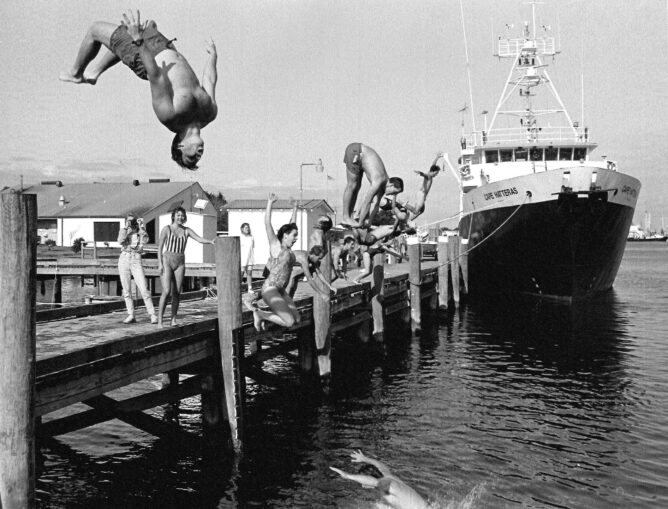
A Duke University Libraries post by two student interns takes us on a deep dive (haha) into their Marine Lab archives, where students have been digitizing materials that capture more than a century of marine science research and campus life. Along the way, they’ve uncovered everything from early 20th‑century studies of crustaceans to mid-century lab bulletins and quirky glimpses of scientific life on the North Carolina coast. Equal parts history lesson and archival adventure, it’s cool to see this type of labor and reflection get surfaced (see what I did there?).
The University of Ottawa and Vanderbilt University have established a new partnership focused on advancing Indigenous digital archives and mobile history research. The collaboration emphasizes Indigenous-led knowledge preservation, prioritizing community engagement, data sovereignty, ethical stewardship, and reciprocal knowledge exchange. The partnership reflects a shared commitment to preserving Indigenous histories and also building long-term, respectful relationships between universities and the communities that build knowledge.
The University of Utah’s Indigenous Storytelling Camp marked its 10th anniversary, having grown from 27 participants to nearly 100 Indigenous middle and high school students from across the region. The week-long program brings students to campus to create stories using various media, e.g. podcasting, photography, mural-making, and animation, while also introducing them to college life and library resources. The library provides makerspace tools, instruction, and a welcoming environment, but it sounds like it’s a truly interdepartmental initiative, bringing together over a dozen campus units.
Really love this idea: DePaul University Library expanded their collections by purchasing nearly 200 books and 50 vinyl records from local independent businesses, as part of a broader commitment to support the Chicago economy and align with the university’s mission. The program prioritized in-person selection, allowing staff to browse with input from store employees, respond to patron requests, and quickly add materials to the collection (and avoiding long shipping times). The team focused on finding items with local connections, including works by Chicago-based creators.
Notable mentions
- A conservation study at Northwestern University Libraries analyzes red inks in West African manuscripts.
- Seton Hall University Libraries has a brief World Cup guide.
- In another life, this would be my job. UC Davis has a wine writer in residence.
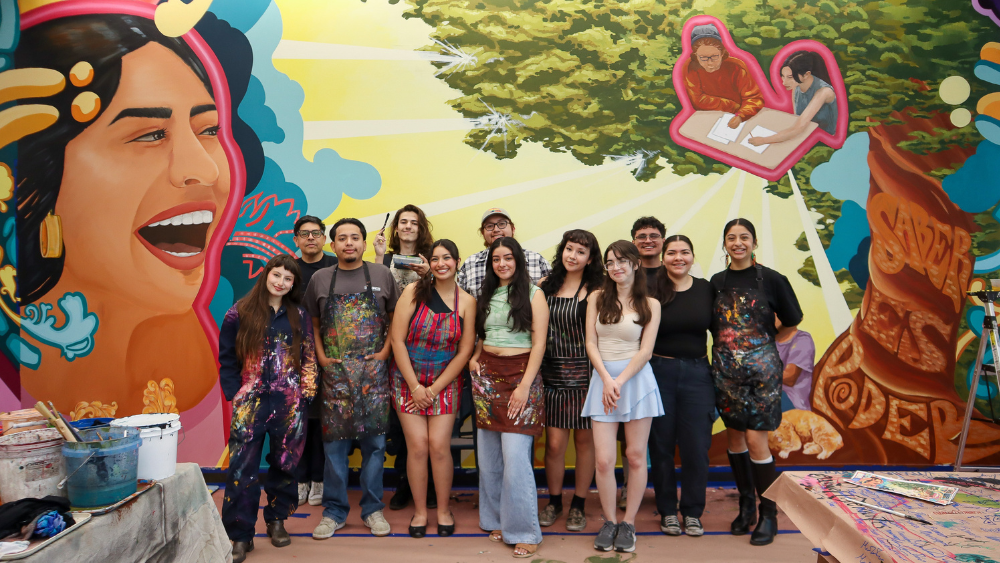
- And speaking of UC Davis they have a new mural! (seen above)
- Wake Forest is still helping students critically find, evaluate, and use information, but with AI now in the mix.
Finally, it’s Pride Month! So a number of libraries posted recommended resources on LGBTQ+ collections and research, including: Villanova, Fordham, Loyola Chicago, Seton Hall, Loyola Marymount, Emory, Wayne State, Binghamton, and University of Utah.
On social
- Apparently, the Backrooms is really just a vast interconnected liminal space between academic libraries. I haven’t seen AcadLibs jump on a video trend this fast since Jet 2 Holidays. Here are some examples from Cal State LA, Willamette University, Wayne State, Bulter Libraries, Loyola Marymount, and University of Iowa.
- Both UVU Library and UNF Library asked their staff to recreate viral meme poses.
- St. Mary’s College Library did the magic food trend, but with summer reading recommendations.
- Finally, I thought this post from CSU Fullerton’s Pollack Library was a cute and creative way to highlight their services for new students.
[…] ← Recently in Academic Libraries: June 2026 […]