I haven’t been this excited about a new Broadway cast recording since Wicked. The teasers started dropping on TikTok a couple months ago and I immediately set up an alert on Spotify.
Listening notes
Did the show always start with an organ solo? I love this.
The diction on “The Ballad of Sweeney Todd” is ::chef’s kiss::
The orchestra has got main character energy!
Jordan Fisher has a lovely voice, but it’s too “Disney prince” for my taste
Analeigh Ashford’s voice, on the other hand, will transport you to another plane of existence. It’s a universe of its own.
I love how gentle Groban is on “My Friends”. My ears are being caressed.
“Epiphany” lives in my head… rent. free.
The fervent chaos of “God, That’s Good” … what a dervish!
“Johanna (Act 2 Sequence)” is like a liquid sound bath
With apologies to my actual children, give me a child like Gaten Matarazzo in “Not While I’m Around”
I keep joking (half joking?) to my wife that I might fly to New York for 48 hours just to see this show.
Lawrence Oates, qtd. in Robert Falcon Scott, Diary, 16-17 May 1912.
When Facebook, Twitter, and Instagram launched, I was an early adopter. I remember when Facebook was limited to .edu email addresses, when Twitter mobile meant SMS, and when Instagram felt like weak-sauce Flickr.
Since the meteoric rise of the Big 3, I’ve been reluctant to get involved in other platforms. I’ve stepped back from social media more generally over the past few years, even before the towers of Twitter began to crumble. By 2019, I had deleted all my Facebook content and de-activated my Instagram account; and while I had set my tweets to auto-delete, I was still actively engaging with my Twitter community. The Elon take-, make-, and break- over pushed me over the edge and I stopped posting completely last spring. Many of my connections left the platform. Some are still there, but the exodus of so many is hard to ignore.
I am still debating whether to get back involved with Twitter, now that some of the dust has settled and those who stuck around are tweeting regularly again. In the meantime, I’ve joined Mastodon. I’m happy to be on a server hosted for library and museum folk. It’s definitely quieter. I’m still not sure I’m doing it right. I do love the content warnings. Even if it’s for things I’m OK with (e,g., politics), it makes it easier to skip over if I’m not in the mood.
The winter garden is in! I have carrots, golden beets, celery, Tokyo bekana, onions, garlic, cabbage, spinach, and potatoes. The okra, peppers, and watermelon are still trucking along as well (such is garden life in a coastal zone 10b). In planter trays I have fledgling cauliflower and Brussel sprouts, but they are slow-going and I’m starting to suspect I’ll need transplants.
This is a fascinating rumination on the possible legal outcomes for YouTube reaction videos.
Links to the past
1 year ago: On arm twisting and outreach work. I”t’s like that meme about everyone’s reaction when the social media person shows up to your office: Shit. Shit. Shit.”
10 years ago: Did I mention…It’s been a decade since I started my first “capital L” librarian job!
Overhead online
“my perpetual advice to new university students: go the fuck to class and go the fuck to bed. almost all student crises stem from not doing those two things”
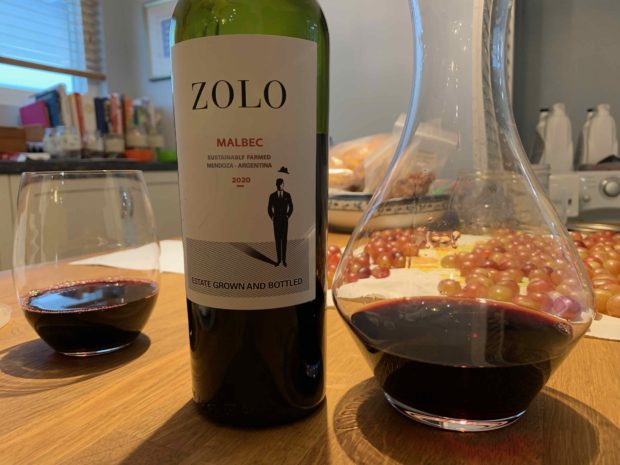
Sometimes you just need something simple, fun, and easy-going. This wine is joyous. If it were at a party, they wouldn’t be the star of the show, but they would be the person you never tire of having around you. “Hey, here comes Zolo! What’s happening, Zolo!” This wine is fruit through and through. On the nose, I get squashed blueberries (with a few stems and leaves left in). On the mouth, tight medium tannins, a hint of black pepper and loads of black cherry. The finish is gentle, with a lingering taste of watermelon jolly rancher.
“As scarce as truth is, the supply has always been in excess of the demand.”
Josh Billings, quoted in Evan Esar, The Dictionary of Humorous Quotations (1949)
One of the most successful actions I’ve taken as a supervisor is to regularly ask my employees for feedback on my performance in robust and meaningful ways. In 2022, I enrolled in a leadership course at MPOW that required my direct reports, peers, and supervisor to assess my leadership skills. The results provided me with invaluable information about where I needed to improve as a manager, but also where I could successfully lean into certain aptitudes for leadership. I am incredibly grateful to have had that experience and for the time my colleagues took to answer the survey questions.
Prior to that, I had already implemented an internal mechanism for upward feedback. In 2020, I wanted to ask my team to evaluate my performance. However, I knew two things to be true: (1) It would be impossible for me not to know who submitted feedback (my team is only three people in addition to myself); and (2) not every person on my team had had the same experience with me as a manager. Even the most honest of my employees would likely hold some things back. And I don’t blame them: managers have direct influence over their employees’ work-life and salary. But my team all agreed that some mechanism for upward feedback was necessary, provided it offered a space for honest discussion and psychological safety.
To tackle both these issues, I developed a simple system for upward feedback that provided me with the information I needed about my performance, while still allowing my employees to maintain their anonymity. It also had the added benefit of being a team-building exercise, since they could compare notes on their different experiences of me as a manager. As one of my employees noted, “We were able to ‘norm’ our experiences of you as a manager against our own biases, experiences, and preferences.” The end results was an action plan for my performance (which I tasked myself with responding to and further developing), in much the same way that I do for them during annual reviews each year.
I’ve posted the entire tool below. You are welcome to use and adapt! (CC-BY-SA)
My department’s upward feedback tool 2020
We all have blind spots that we are not aware of. We all make mistakes. The primary purpose of this exercise is to help me identify my blind spots as a supervisor/manager and address them proactively. Additionally, this exercise will help me identify what you think works well so I can continue to enhance those actions.
As the lead for our department, I want us to be effective, both individually and (more importantly) collectively. This means we need to be more than just a group of coordinated parts. We have to be an integrated, mutually beneficial team. It takes effort to be a team: we share the best and worst of each of us. So it takes some amount of consensus about our shared goals and experiences in order to keep moving forward.
To that end, I’d like to hear feedback from you, whether it be about my managerial skills or work in general. This is meant to be both an assessment mechanism and a team-building activity.
What I will do
Once you provide me with feedback, I will provide you with a written response to each point raised and, where possible, I will tell you what actions I will take to address your recommendations. If I am not able to take action, I will provide an explanation for that.
What you will do
You will work together to draft a single assessment document, no more than 3 pages if possible. It should be authored collectively and anonymously. Any recommendations or comments should be agreed upon by the entire group. Strive for 100% consensus.
In that way, (1) I will not be able to assign any comments to a single person and (2) you can find common ground among your colleagues both in your assessment of me and your recommendations for future actions.
Here are the questions you should try to answer:
What do you see as your supervisor’s greatest strengths?
What area(s) do you think your supervisor should develop in order to be more effective?
Are there other comments about your supervisor that you would like to share?
If you have any questions, please don’t hesitate to ask me.
I especially like #20. I’ve stopped trying to kill spiders in the house and instead try to help them find their way out. I also say “good morning” and “excuse me, friends” to the bees each day when I water my garden. There’s something profound in acknowledging you’re not the most important creature in the room.
“The ability to do hard things is perhaps the most useful ability you can foster in yourself or your children. And proof that you are someone who can do them is one of the most useful assets you can have on your life resume.”
“Reading is letting someone else model the world for you.”
Garden update
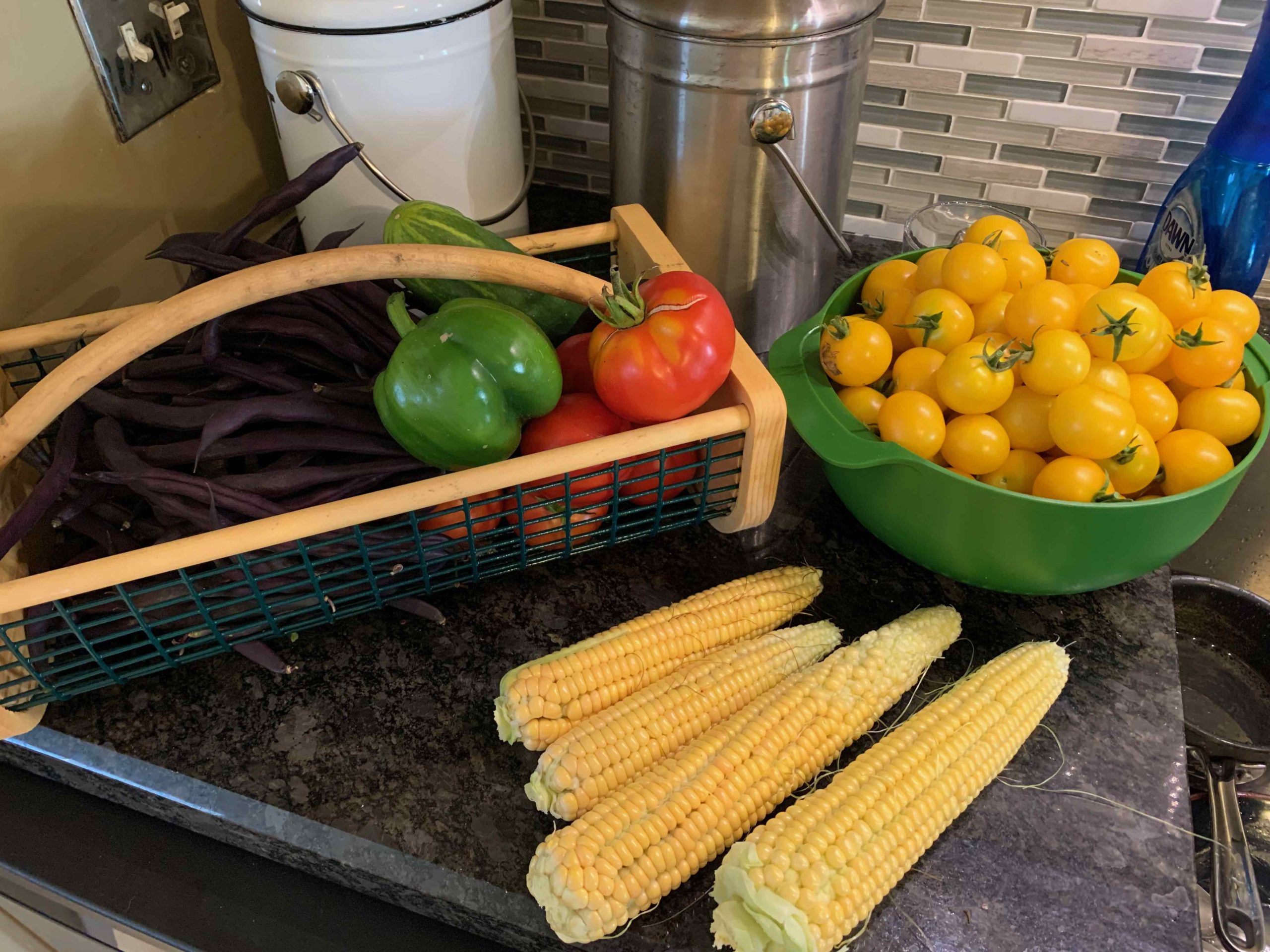
This is the last of the summer harvest. My tomatoes, beans, and corn have mostly dried up or gone to seed. There are still peppers and butternut squash that could outlast the month. Even one of my watermelon vines is making a Hail Mary effort to survive. But now is the time to start planting winter crops. I already have cauliflower, broccoli, Brussel sprouts, and celery seeds in starter pots.
Links to the past
1 year ago: Like Doodle, but not Doodle. I never want someone to schedule a meeting with me unless it’s at a time when I chose.
“I love public libraries not just because of what they’ve done for me personally, but because they are little socialist oases in the capitalist desert hellscape of twenty-first century America.”
Pierre de Ronsard (Sonnets pour Hélène bk. 1 no .43, 1578)
I just returned from a weeklong vacation. Not a staycation. Not a planned adventure. A real do-nothing, plan-nothing, expect-nothing vacation where, with the exception of one personal excursion and two family dinner reservations, I had no plans each day other than to “figure it out when I wake up.” It’s the first such vacation I’ve taken in… well, ever. Every extended trip in the past decade has been planned to the bone: London, Northern California, Prague, France. Each of these had a detailed itinerary; and gods damn it everyone was going to follow it!
Not this time.
This time I went to Maui. And I did nothing. I did nothing for days. With the exception of the aforementioned excursion (to see the sun rise over Haleakalā) and the two family dinners (made at others’ requests), each day was its own discovery.
Coming back from a vacation of this magnitude (in detachment, not length) would take some getting used to. I deleted Teams from my phone before I left. I’ve never had email on my phone so that connection was already severed. I didn’t bring a laptop or tablet device. I told my team they could contact me, but only if it was worth a phone call (which was essentially the same as saying don’t). So I knew when I returned I would be coming back as if I had completely jumped off the prime timeline.
I’ve long exorcised the Sunday scaries from my life (with the help of a therapist), but I had the Sunday scaries this time. It took an inordinent amount of willpower not to start “cleaning up my email” the day before. I had to remind myself that work never ends, and that “getting a head start” isn’t possible when there is no finish line. I let it go. So here is some additional advice on how I managed to successfully re-enter the office after an extended vacation.
Create a buffer. Before you leave, block off the day you return to the office on your calendar. Don’t schedule or plan any meetings. Make sure your shared calendar shows you as “busy” so folks don’t put a meeting there while you’re away.
Manage expectations. While you’re at it, set an away message that essentially says “Don’t email me now.” My message this time was as follows: “I am out of the office on holiday until Tuesday, July 18. If you need a response from me, please email me after that date. (I will not have access to email while I’m away and I will not be able to “catch up” on email when I return.) For general library inquiries, you can contact…” (One day, I hope it becomes company policy/culture to block emails when someone is on vacation).
Ask a friend. Before jumping into email, ask your team “What did I miss that I should pay attention to first?” Your colleagues, especially if you have a good rapport, will know what matters most to you.
Speed clean. Once you do start processing things, process all the easy messages first: the ones that don’t require a response, the junk mail, the requests you will pretend you never saw. Get those out of the way if for anything to reduce the unread count on your inbox folder.
Be kind to yourself. Take frequent breaks throughout the day. Take a walk around the office. Try to find at least one thing that’s changed since you left.
Monotask. For the stickier action items, tackle them one at a time. Some of your responses may be “I’ll get back to you on this” and that still counts.
Don’t apologize. Don’t say sorry for being away or not replying sooner. You don’t owe someone who ignored your away message (see #2) an apology.
Your mileage may vary, but by the end of the week I was fully back on track. No more Sunday scaries.
“Reader was probably never going to become the world-conquering beast Facebook eventually became, but the team felt it had figured out some things about how people actually want to connect.”
“The very idea that, once work hours were over, no one could get hold of you—via email, text, Slack, whatever—is completely alien to contemporary young people, who never let their cellphones leave their hands. Yes, it’s because they’re addicted, but it’s also because we’re all expected by bosses, co-workers, and friends to be online and available pretty much every time of day.”
News from the garden
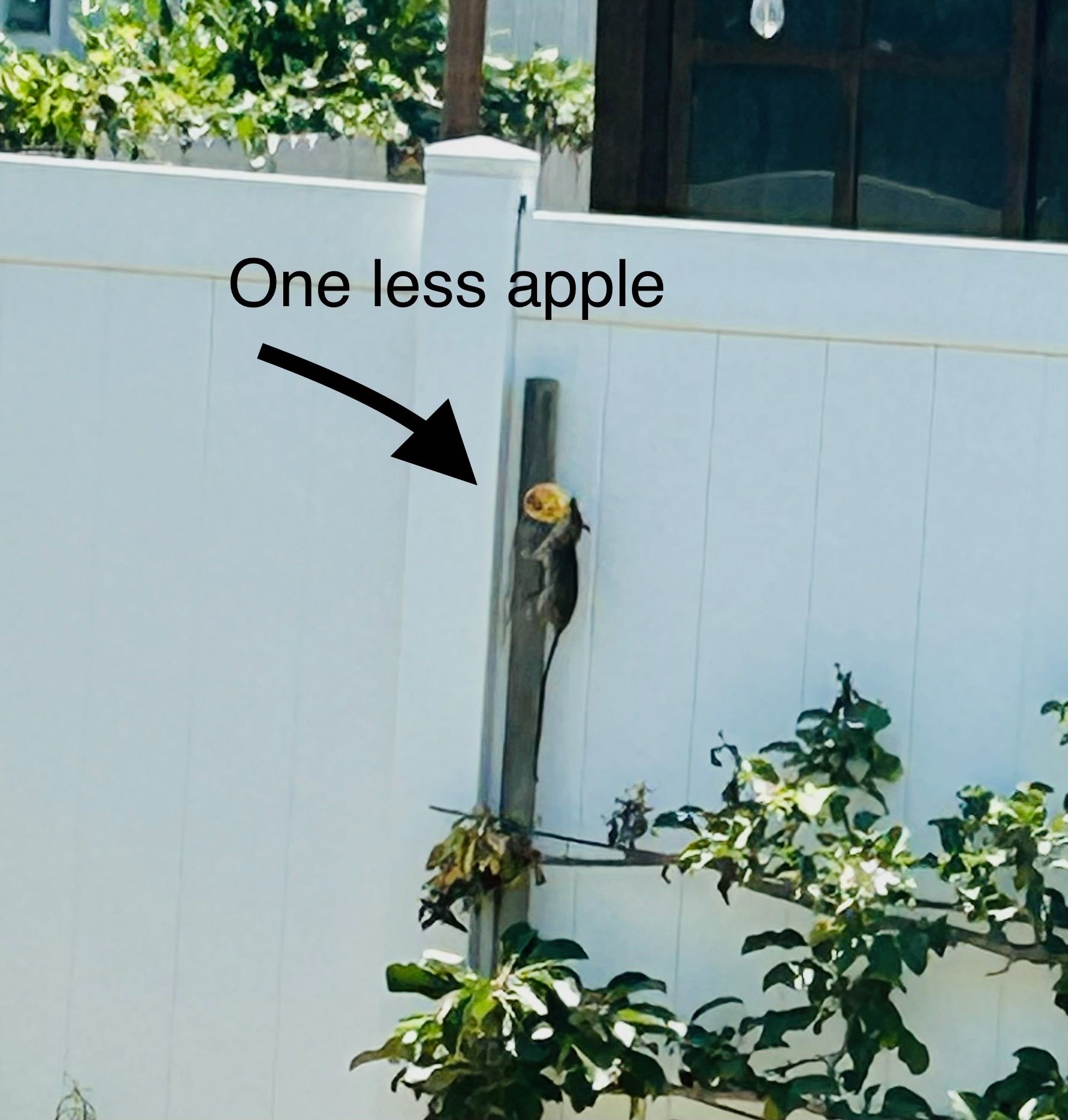
My daughter sent me this photo during work. After a three year hiatus, the fruit rats are back. This one managed to eventually carry the apple over the fence into the neighboring yard. Enjoy, my friend. But you better stay away from my corn.
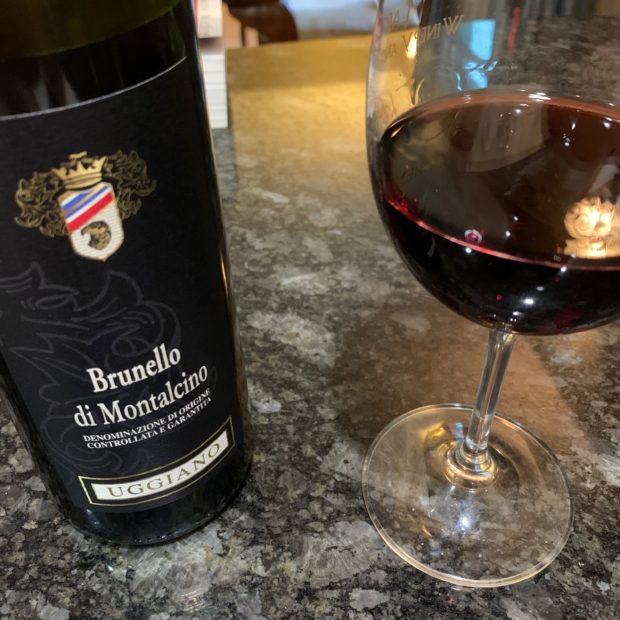
With a color somewhere between pale and dark ruby, this wine has cherry, clove, and sandalwood on the nose (maybe also chocolate?). A fleshy mouth-feel with sour cherry. The finish is all over the tongue, even if it’s short-lived. After decanting, the wood gets subtler and the sweetness of the cherry comes through more.
“I am convinced that about one-half the money I spend for advertising is wasted, but I have never been able to decide which half.”
John Wanamaker, Quoted in Bible Conference, Winona Echos (1919)
It’s been 5 years since I attended an ALA Annual Conference. My interest in this yearly gathering of librarians from around the country has waned considerably in the last half-century as I’ve become more and more entrenched in the work of my own institution. That’s a story for another post. What I wanted to briefly talk about today was one aspect of ALA Annual that I miss: the PR Xchange Awards and the John Cotton Dana Awards. Both of these awards celebrate excellence in library communications efforts. The JCDs focus primarily on strategic communication and public relations, while the PRX celebrate singular promotional items.
This year’s award winners highlight a few academic library projects. The University of Colorado Boulder Libraries’ “Culture Crawl” is a collaboration between eleven cultural and heritage organizations to highlight library spaces, services, exhibits, and local museums. It was the only college/university to win a JCD this year. The PRX awards had a much better showing from the academic side: Montana State University, Washington University, and James Madison to name just a few.
While I love that these two awards bring attention to academic libraries producing remarkable content, I would love to see a separate award for excellent marketing, communications, and strategic outreach (and/or programming) for higher ed libraries. The needs of our communities and the best practices for reaching them differ just enough from our colleagues in public libraries to merit our own arena. Our audiences are captive and demographically narrower than the general population. Moreover, our ultimate ends lean more towards the specific (i.e., supporting graduation and retention) rather than the general (e.g., lifelong learning). Outreach to students, faculty, and staff is a different beast altogether than outreach to a local community.
In developing a new award, the intent and structure of the ACRL Excellence in Academic Libraries Award (currently on hiatus) is a good place to start: how does communications and outreach connect with your library’s strategic mission and the mission of the college/university? Are you connecting the dots between (1) the skills, collections, and services that libraries provide; (2) our professional ethics; and (3) the goals of the housing institution? Outreach and communications success could be measured quantitatively or qualitatively, but would needs go beyond gate counts and feedback forms.
All that said, perhaps a separate award isn’t necessary. I do enjoy seeing the wide variety of materials showcased by both the JCDs and the PRX. Either of those awards could create separate categories based on library types. I think what I want most of all is simply to see more academic library external commutations work. I know folks are out there creating remarkable content: let’s see it and celebrate it!
“Every fleeting moment of our spare time is surrendered to the superficial offerings of the attention economy, all of it designed for addiction, the goal being to monetize people’s experiences rather than create meaningful ones. […] Many have extolled a leisure ethic, and none would say that time well spent lies in ambitious careerism or in drifting on a sea of addictive content. Most would agree that flourishing in time consists of free, active, thoughtful engagement with the world in accordance with one’s nature.”
“The archive contains around 5,000 magazines, 200 boxes of business records, 10,000 audio and visual recordings, and 4.5 million prints and negatives that chronicle Black life from the 1940s until the present day.”
“Not every book is for every reader.” Good advice for anyone creating art.
News from the garden
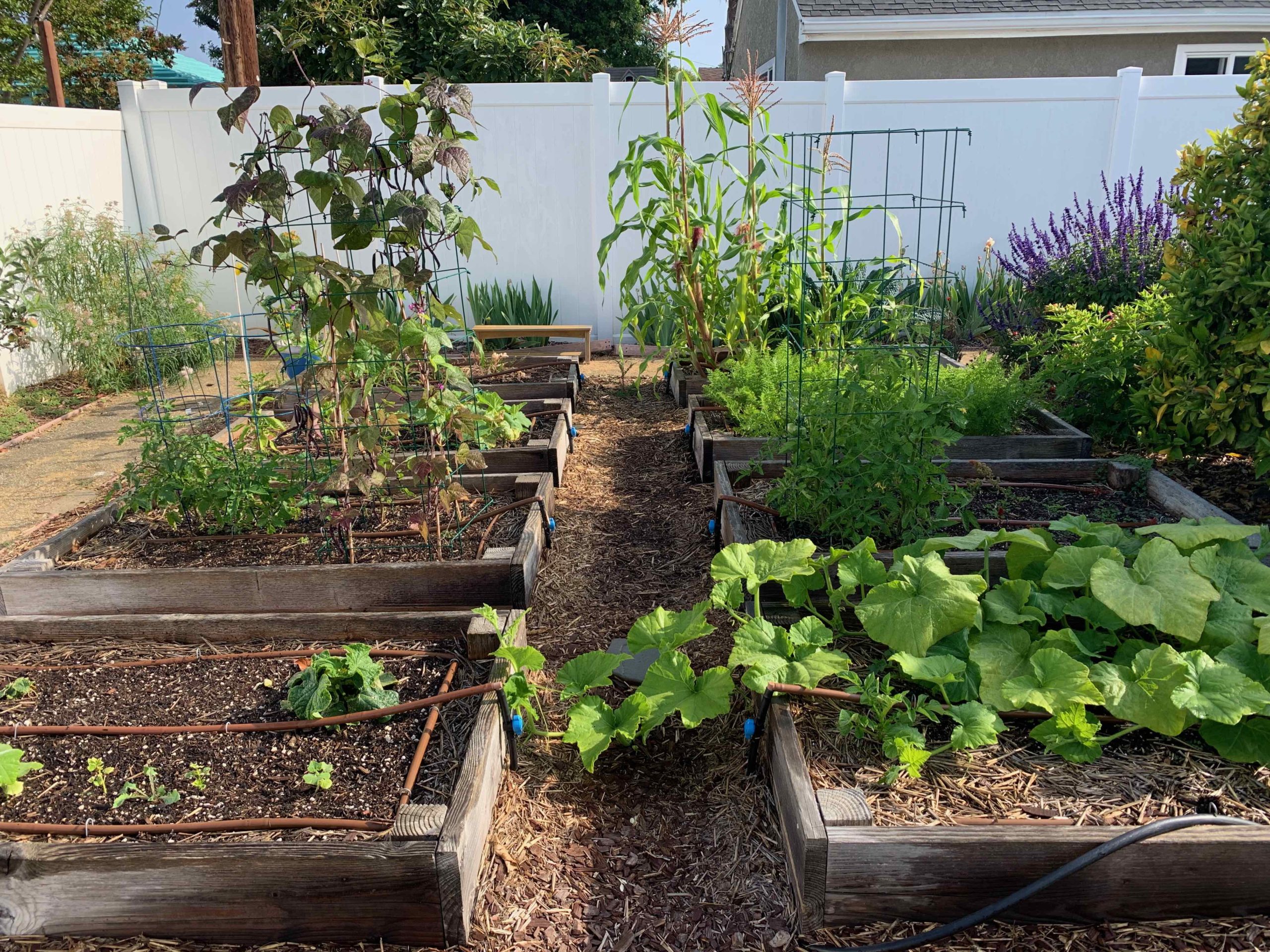
The vegetable beds are [finally] in full swing. The vine in the foreground is butternut squash. And look! The corn made it knee-high before the Fourth of July! There are also tomatoes, peppers, and beans to be excited about.
Links to the past
1 year ago: Where the worm dieth not, and the fire is not quenched. “We give far too much weight to Twitter’s impact on social and political life and “the public square.” Collectively, we overestimate its influence, obsessing to an unreasonable degree over how it will react to our content, knowing full well that any storm we create today will be subsumed by next week’s hurricane of rage.”
“Plans are worthless, but planning is everything.”
Dwight D. Eisenhower, 14 Nov. 1957.
The way knowledge work happens these days, everything is treated as an emergency. Cal Newport calls this “rocking and rolling with email” and it goes like this: You work on a project until you get to a point that you need someone else’s input, contribution, or review. You send that person an email or chat saying something like, “Hey, can you take a look at this?” Your project may have to sit in a holding pattern until that person can respond.
Now, imagine this is happening all over within an organization: thousands of unstructured, unsolicited requests constantly interrupting whatever project is supposed to be a team’s priority. How can an organization function this way? I imagine it much like a ball of tangle worms slowly making its way from point A to point B: it will get there eventually, but it’s not going to be quick. And all of us get dragged along with it.
The alternative to this is project planning: defining in advance what everyone’s role will be and when their skills will be needed. I have managed to move a few of my projects into the mode: our annual Library Open House, the publication of our annual report, the planning and promotion of our premier speaker series, Faculty Pub Night. Each of these projects have clearly outlined timelines, milestones, and responsibility matrices. Everyone knows when their attention for these projects will be needed and thus we can plan in advance to set aside time for them. The work is still labor intensive and rigorous, but there’s no stress about whether we’ll finish in time or uncertainty about when we need to make room for it in our to-do lists.
Lately, I’ve been overwhelmed with the frequency of last minute requests. I don’t mean things that come up unexpectedly. Shit happens. But projects that were initiated weeks or months ago and no one took the time to plan out the steps necessary to bring the project to completion and loop in all the parties involved. Instead, they progressed step by step assuming that, when the time came that my team’s skills would be needed, we would have the ability to drop whatever we were doing to accommodate their project.
But there’s the rub: we’re not sitting around waiting for someone to drop a project in our lap. For better or worse, outreach library folks tend to be proactive, go-getter types and my team is no exception. We have plans. We have projects. And many are in motion at any given time. There’s nothing wrong with adding something new to our plate, but not when we’re in the middle of a four-course meal.
As a result, I have to say no (or not now) to more projects than I would prefer. Often, this is inconvenient to the requesting party because, well, they have a deadline. But as I like to frequently tell my team, someone else’s lack of planning does not constitute an emergency on our part. As a manager, I feel the obligation to protect my team’s time and attention. I say no to projects we didn’t plan for so they have the ability to say yes to those we did.
“The charismatic leader, for better or worse, could be understood as a mere mirror or a charming marionette — the ‘collective projection of the charismatic mass, a projection out of its anguish, its myths, its visions, its history and its culture, in short its tradition and its oppression.'”
“Six-in-ten U.S. adults who have used Twitter in the past year say they have taken a break from the platform recently. And a quarter of these users say they are not likely to use Twitter a year from now.”
News from the garden
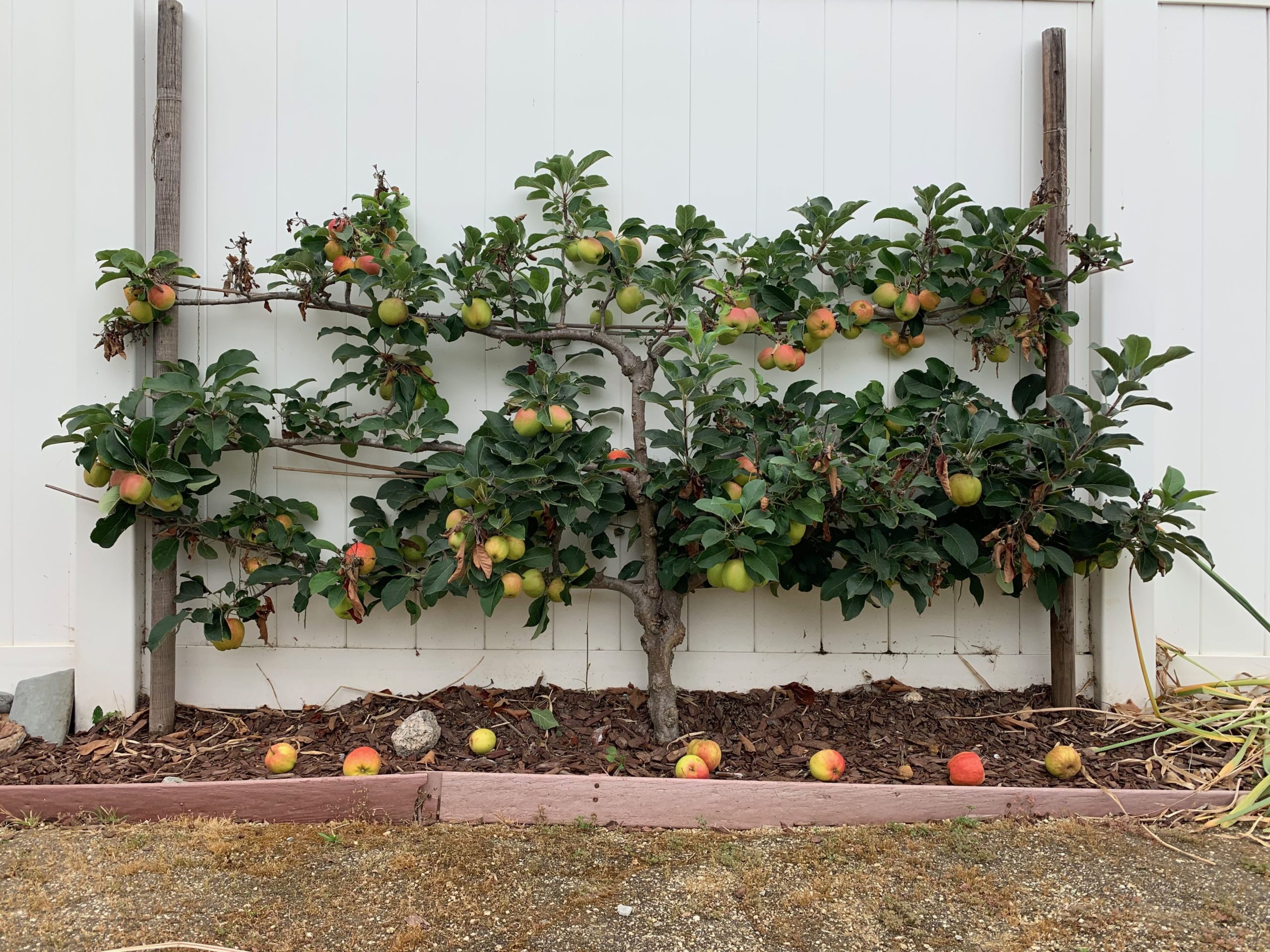
The June drop finally happened on my apple trees. This is three weeks later than usual, which seems to be the way most of my garden is going this year. Too many gray days in April and May slowed everything down.
Links to the past
1 year ago: Say no, and carry on. Still working on this, but continuing to get better.
10 years ago: ALA Battledecks 2013. Don’t let it be forgot, that once there was a spot, for one brief shining moment, that was known as Battledecks.
Overhead online
“If you go to a library and see what the librarians are doing, it’s hard to imagine anyone being against it. We build collections that allow people to find themselves on the shelves.” ALA President-elect Emily Drabinski
According to the label, this “bone dry” riesling (0.3% residual sugar) was grown in soil rich with shale, gravelly loam, and clay with limestone. The first thing you notice on this wine (other than its slightly amber-straw color) is the nose. If it has nothing else, it has a bouquet enticing enough to draw you in: honey, mead, and apple. Medium to heavy bodied, on the mouth you’ll find lemon-lime soda and pear, with a tart, mineral and lemon finish.
“So it must be slow for you at the library in the summer.”
Everyone.
Let’s be clear. It is not slow for me during the summer. It has never been slow for me during the summer. As a department head and as an outreach librarian, the summer is the inflection point between the end of one academic year and the beginning of the next. It is the crest of two waves approaching each other from other sides of the time axis: from the past year moving forward in time is the wave of assessment, reports, and reflection. From the upcoming year moving backwards in time is all the necessary planning, strategizing, and worrying. And here I am in the middle, just letting the waves crash over me.
What I do to wrap up the year
Write my annual review, detailing my accomplishments in the areas of performance, research, and service
Pull together a list of all our programs, their costs, and attendance numbers
Pull and analyze a year’s worth of social media data. Create prez for leadership team.
Write the reports for any committees I chair (there are always at least two)
Submit data demonstrating progress my team made on the library’s strategic objectives
Begin the process of producing and publishing the library’s annual report to stakeholders/donors (finished in November)
Read and provide feedback on all my direct reports’ annual reviews
Archive all the things! (old working documents, photos, emails, etc.)
What I do to jump start the year
Set up all the Box folders and planning documents for next year’s events
Create a calendar that lists all the event production and communications milestones for all of next year’s events
Start the graphic design work for our 4 major tent-pole events/projects
Schedule and run planning meetings for fall’s earliest events
Estimate the total costs of next year’s events/outreach based on last year’s data
Try to map out (on my calendar) all my high-priority and/or new projects (so I don’t overcommit myself at any given time)
All of this work takes most of May through June to complete. All the while, there are still ongoing requests for support on other people’s projects, occasional events and tours to manage, and my own research. Summer is, in fact, the busiest time of the year. Granted, there are fewer interruptions, what with folks taking vacations and most of our faculty and students being away; tasks get done faster, making room for… more tasks. I could take it easier— rest on my laurels, slow down, and recuperate— but I would prefer to be busy now so that, come fall, I can switch to autopilot and ride the wave of the semester straight into winter break.
“Turning down additional work and obligations allows you to remain focused on your top priorities and the commitments you have already made. If you don’t do this, it’s easy to find yourself wrapped up in other people’s priorities […]”
“I’m not trying to pretend this is a novel idea. It clearly isn’t. But it’s a little like ordering a Wendy’s Spicy Chicken Sandwich on a roadtrip every five years just to remember it makes me feel like shit.”
“Customization can be surprisingly homogenizing. Everyone, or nearly everyone, is on Facebook: It is the most convenient way to keep track of your friends and family, who in theory should represent what is unique about you and your life. Yet Facebook seems to make us all the same. Its format and conventions strip us of all but the most superficial expressions of individuality.”
News from the garden
When we bought our house more than a decade ago, we didn’t realize there was a gladiolus bulb sleeping in our front flower bed. Each year, it has dutifully popped up in late Spring. This year however, a second one shot up just as the original one was beginning to fade.
Links to the past
10 years ago: On breaking up with libraries. “I’m not willing to be a martyr for my profession if it means compromising what I want out of life […]”
10 years ago: Bits and pieces. A snapshot of what library folks were talking about in 2013: the higher ed bubble, building repositories, and the information literacy standards.
10 years ago: Shokunin and the power of habit. “While I don’t know that I could ever attain a level of perfection equivalent to the idea of shokunin, through force of habit I can in the least put these same practices to work.”
Overheard online
@LPerenic: How on earth do you know that?
@bookstax: I am a librarian. If I don’t know it, I know where to look. (on Twitter)
I am a librarian. If I don't know it, I know where to look.