Every week, I set aside 1-2 hours for a weekly review. I look back over all the work tasks I’ve completed, see what’s coming up, and plan out the following week. This practice has helped me to maintain balance in my to-do list, reduce anxiety around the annual review process, and ensure that I don’t let important-yet-not-urgent projects fall by the wayside.
I first came across the practice in David Allen’s Getting Things Done. The weekly review is an essential part of my work-week. Without it, I’m given over to things that are current in the moment, “urgent,” or simply top of mind: none of which are accurate indicators for deciding how to prioritize my time. During the review, I look over (and record) the past week’s accomplishments, upcoming tasks, and the time I have available in the coming two weeks. And then like a puzzle, I see what work I can fit into the open slots in my calendar.
For me, the weekly review is a space for reflection. Moreover, it’s a productivity “hack” for reducing my anxiety about the annual review process. Like some academic libraries, our annual review process requires librarians to write a narrative detailing the past year’s progress in three areas: performance, professional development and research, and service. It can be an arduous and soul-devouring exercise. The weekly review, however, helps alleviate the pain somewhat. Having created a weekly record of my accomplishments, when it comes time to work on the annual review (and I begin work four months in advance) I have all the raw material already gathered.
It’s a simple practice that has a huge impact on my work-life balance. By ending the week with reflection and task-organization, I can go into the weekend, having left work behind me, care-free.
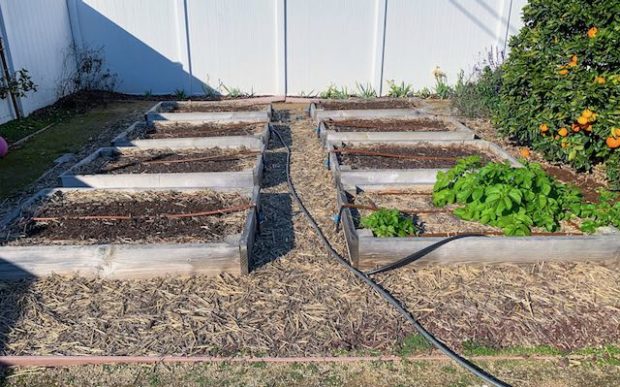
[image: The raised beds in my garden are cleared and ready for planting]
Each year, I say that I am not the type of person who makes New Year’s resolutions, but if I’m being honest, I do enjoy self-reflection and rethinking daily life. I can admit I’m a #goals junkie. That said, I like to think I’m more forgiving of myself at this point in life, even if I still struggle with the urge to take on too much.
For a number of years, I have been striving to do less, but to do those few things better. I’ve reduced my annual work goals, I’ve focused my quality leisure time to a handful of essential activities, and I’ve built some elaborate structures around my time. For the most part, it’s worked. We can talk about some of the downsides another time. For today, I want to focus on what practices I’m bringing into 2023.
Notebooks
I’ve accumulated a number of notebooks: moleskins, daily planners, quarterly planners, gratitude journals, habit-tracking journals, etc. I even have a custom journal just for gardening. All of them are sitting in a drawer having never been used; although, I’ve managed to stop myself from buying new ones. My goal this year is to fill all those notebooks.
Semi-planned weekends
My idea of a perfect weekend is one in which nothing is planned. Maybe I’ll go for a walk. Maybe I’ll play video games. Maybe I’ll just do maintenance around the house and yard. I use the long, unstructured time to recharge, but I also recognize the joy that comes in having something to look forward to each week, whether it’s an activity or a project. So my goal this year is to do some moderate planning for my weekends: maybe select one AM and one PM activity/project each day and put it on my calendar.
At work: skills
One downside of being in middle management is the constant pull toward “settling.” I could easily fill my day with meaningful tasks, including supporting the needs of my team and pushing along various projects. I could stay in this state for years, but I’m not content with that. I want to continue to develop new skills and improve nascent ones. This year, I’m focusing on advanced Excel techniques and (if time permits) intermediate Adobe Creative Suite work.
Having a theme
Inspired by CPG Grey, last year I selected a theme to help drive and direct my personal goals, leisure activities, and home projects. In 2022, my theme was “local.” While I didn’t finish everything I set out to accomplish, I am nonetheless amazed at how much I was able to do. This year, I plan to continue that method and select what I give my attention to according to a general theme. For 2023, my theme is “connections.”
Does this enlarge or diminish me
I love this question, which I first encountered in 4000 Weeks: Time Management for Mortals, of asking “Does this enlarge me or diminish me?” Often, I feel the urge to do something but default to doom scrolling or YouTube. But if I ask myself whether an activity enlarges me or diminishes me, I can perhaps select better choices. The same question might be useful in determining how I react to stressful situations at work.
Memory project
I’ve had this idea knocking around in my head for some time now. Like anyone, there are some memories that I recall often and others that arrive unexpectedly, perhaps for the first time in decades. Perhaps it’s a mid-life crisis thing, but I’ve been feeling the need to write all this down. So this year, I’m going to set up a digital space to organize and record as many memories as I have the time and ability to recall.
I think many will agree that the easiest solution is not always the best solution. Sometimes, a little resistance, a little friction, can be helpful. It can even be more human.
Take scheduling meetings. Occasionally, people will put meetings on my calendar. I’ll come into the office or back from lunch and there it is: a meeting invite tentatively waiting for me to accept its existence. Now, I know the sender had the best intentions. They would like to have some of my time and attention, so they looked at my Outlook calendar and selected a time they thought would be most convenient for the both of us. As I’ve noted before, the problem with this style of scheduling is that it assumes that just because someone is “free” that they are also “available.”
Unless explicitly instructed to, putting a meeting on someone’s calendar treats them as if they were a machine. Available or unavailable. Ones and zeros. What our calendars don’t take into account is all the unspoken baggage of the workday. How must preparation is needed for a meeting? How much debrief will this meeting require? What other things are happening that day that might be emotionally weighing on the you? How much mental bandwidth do you think you’ll have at the time of the meeting?
All of those things are lost in translation when simply “looking for an open spot” on someone’s calendar. Modern work culture has tricked us into thinking that shared calendars, with all their convenience, are a net good. They certainly have many benefits, but the ability to commandeer another person’s time is not one of them. By adding just a little friction to the meeting reservation process, in which the recipient has more agency (i.e. opt-in) in the selection process, we can treat our colleagues more like humans than machines.
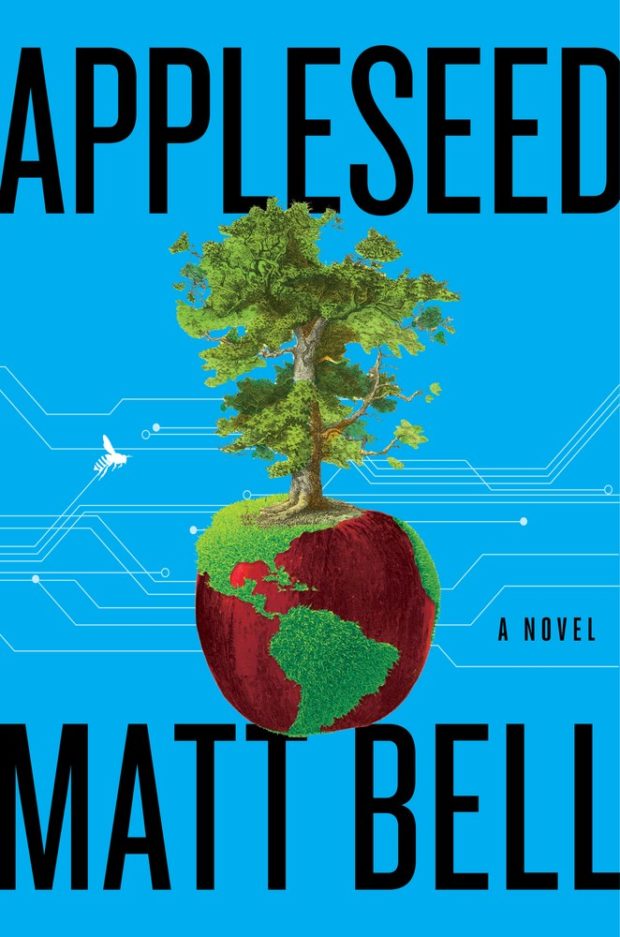
I wanted the first book I read in 2023 to be a work of fiction. I wanted to become immersed and nothing pulls me in faster than post-apocalyptic stories. Appleseed: A Novel by Matt Bell is a story that takes place across three timelines: one in the pre-industrial North American frontier, one in the near future following ecological collapse, and one in the far future after a continental-sized glacier has taken over North America. The characters that inhabit each of these stories are connected, not only by name, but seemingly also in spirit. Interwoven thematically (and sometimes literally) with their stories are the myths of Ancient Greece.
I found myself having to constantly slow down my reading. I wanted to speed through to see how it all ends: the plot driving above the speed limit. There are moments of wisdom throughout worth slowing down to catch. Each of the characters contemplating their place in nature, mirroring humanity’s greater relationship with the environment. It is a profoundly sad book: there is loss, betrayal, and deep love. We watch as the sins of the fathers and mothers, from one Fall to the next, move humanity and its ecosystem toward its inevitable end, each still seeking for some way to regain paradise.
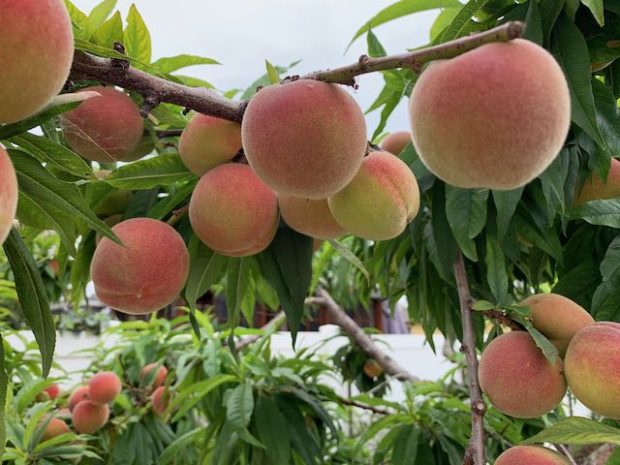
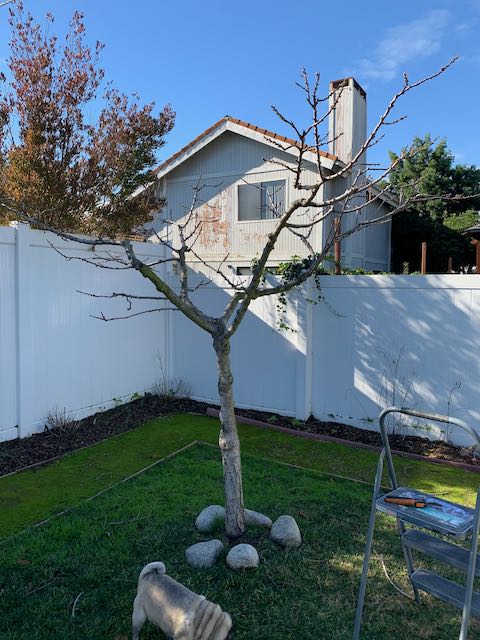
Pruning the peach tree in my yard is always a traumatic experience. Unlike the oranges, avocados, and apples in my garden, peaches require substantial work. I have to remove as much as 60-70% of the tree each year. You see, peach trees will only grow fruit on second year growth: older branches will not produce new fruit. Or to put it another way: more branches does not result in more peaches. If anything, it will negatively harm your crop by stealing energy from fruit production, weighing down the tree, and overcrowding the new branches. To help bring it to its fullest potential, you have to be brutal in your pruning practice.
This labor of love came to mind as I was working on an external relations piece for the library the past week. I was ruthless with my editing shears. It doesn’t make the experience any less difficult– to see all those darling branches on the cutting room floor–but the final result is a much tighter narrative that will allow it to bear the ripest fruit.
The author’s peach tree, pruned and ready to bear fruit.
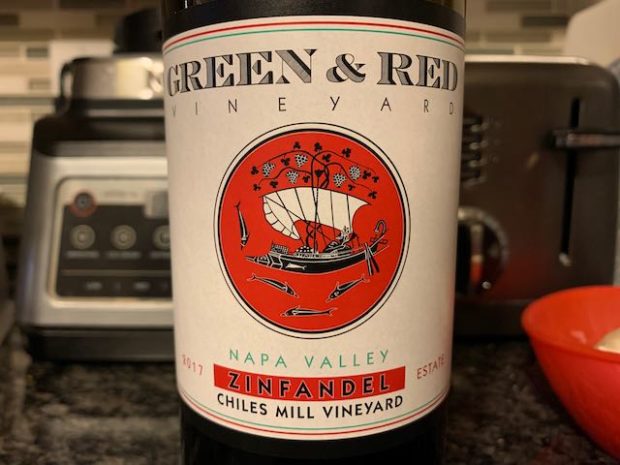
Peppery notes on the nose, with a bright maroon hue. Fruit-forward on the first sip, quickly followed by pointed tannins and tart pomegranate. A light an clean body with a finish of dried fruit and jolly rancher.
I am so happy with my reading practice this past year. I read books from my own collection and recently-published ones. I read both print and e-books, as well as a few audiobooks. There is fiction in there, a graphic novel, poetry, science, and popular culture: by far the most diverse reading list I’ve made it through in years.
I, Robot / Isaac Asimov
I Hope We Choose Love: A Trans Girl’s Notes from the End of the World / Kai Cheng Thom
Self-Compassion / Kristin Neff
White Fragility / Robin DiAngelo
1619 Project / Nikole Hannah-Jones
Wide Sargasso Sea / Jean Rhys
Braiding Sweetgrass / Robin Wall Kimerer
Fall / Neal Stephenson
Subtle Acts of Exclusion / Tiffany Jana and Michael Baran
Maus / Art Spiegleman
Giles Goat Boy / John Barth
How to Raise an Antiracist / Ibram X. Kendi
Out of Office / Charlie Warzel & Anne Helen Petersen
You Feel It Just Below the Ribs / Jeffrey Cranor & Janina Matthewson
Four Thousand Weeks / Oliver Burkeman
On Poetry and Poets / T.S. Eliot (at least the “On Poetry” parts)
Dracula / Bram Stoker
168 Hours / Laura Vanderkam
Vineland / Thomas Pynchon
What If 2 / Randall Munroe
Four Thousand Weeks / Oliver Burkeman
The Golden Compass / Philip Pullman
Five Dialogues / Plato (mostly)
Steppenwolf / Herman Hesse
For 2023, I plan to keep up my practice of making time for reading each day, rotating through books already owned, new popular fiction and non-fiction, and poetry. Here’s to another year on this rock with good books!
Day 2 of the Library Marketing and Communications Conference began with a keynote by staff from Brooklyn Public Library about their recent “Books Unbanned” campaign. The panelists discussed how they successfully managed what quickly became an international phenomenon to simultaneously increase access to e-books and raise brand awareness. I was feeling pretty run-down by this point in the conference, but I still managed to attend a presentation during each session. Here are the highlights.
Video Killed the Radio Star: Creating Engaging Short-Form Video Content for Your Library’s Social Media
I’ve been hesitant to dive into creating short-form video content on a regular basis, but this session gave me the inspiration I needed to go for it. In addition to detailing some basic needs (ring light, microphone, green screen, and video editing app), each of the panelists highlighted some of their most successful content and described their creation process.
Main takeaway: There is no getting around it: video content takes time. However, on both Instagram and TikTok, you have the potential to reach audiences outside your followers.
Meghan Kowalski (U. of the District of Columbia) on Developing Your Brand
Kowalski walked us through the process of defining, determining, and if necessary attempting to change your library’s brand. Branding is not a logo, or a tagline, or even a campaign. “Branding is the express character of your library: It’s a vibe.” You can determine what your brand is through interviews, focus groups, and analysis of your services, but to change it is incredibly difficult. There were a number of takeaways for me on this one, including:
Branding is an art, not a science. You don’t need (or even want) rigorous data.
Create an internal branding document for your colleagues.
Branding is inexorably linked to customer service.
Audience Segmentation and Email Marketing
This year, I’ve started spending more time working on email-based outreach, so I was excited to attend two sessions on the topic: Jayna McDaniel-Browning and David Brockton on Using Segmentation and Email Marketing and Sarah Barton-Bridges and Skyler Noble on Controlling Your Own Content with Email. The presenters offered a number of good tips, including:
using emojis in subject lines (the weirder the better)
creating segments based on who clicked on what
sending out “preference” forms to get a sense of which users are interested in which materials
creating separate newsletters based on activity (e.g., work, play, learn) instead of audience demographic
correlating email blasts with web analytics
Segmented/targeted email have a much higher open rate (40% should be your minimum)
Change up your call to actions (not just always “Learn more”)
Final Thoughts
By the end of Day 2, I was pretty wiped out. I’m still recovering from a week of being under the weather and two 12+ hour travel days didn’t help. Nonetheless, I was thrilled to be back at this conference. To my knowledge it’s the only library conference that specializes in the work that I do. Moreover, there isn’t any sense of competition among presenters and attendees: we all genuinely understand each others’ struggles. =)
Communications is only a piece of what I do: most of my time is spent managing a department, collaborating with other units, representing my team on the library’s leadership council, and overseeing a host of events, exhibitions, and orientations. However, it’s certainly one of the most exciting and creative aspects of my job, so I enjoyed the opportunity to talk shop with library colleagues from other institutions.
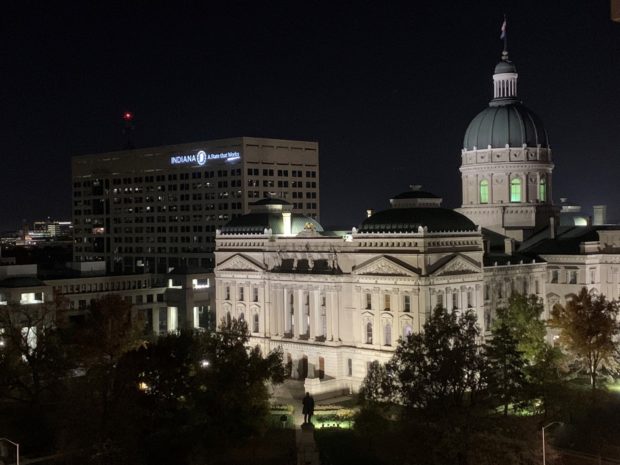
This week, I’m attending my first in-person conference in more than three years. I am in Indianapolis at the annual Library Marketing and Communications Conference. This is my third time attending this event and what I loved about it most in 2016 is still true today. The attendees are a mix of librarians and non-librarian staff, instruction and outreach folks, graphic designers, social media managers, front-line staff and administrators, all from both academic and public libraries. It’s a hodgepodge of “people who do outreach work” with a specific focus on communications. These are people who do the same work I do, albeit in a wide variety of settings and capacities.
I attended every possible session on Day 1 of the two-day conference. Here’s a run-down of my favorite sessions.
Chris Tonelli (NC State) on “The Comfortable Uncomfortable”
Tonelli spoke about two recent events from the NC State Libraries system: the discovery of the First white supremacist history of their building’s namesake as well as the discovery of a library-adjacent (though not technically employee of) staff member who identified as a Proud Boy and was accused of doxxing students. Tonelli’s presentation urged folks in the room to not think of these as “PR nightmares” and instead see them as opportunities for healing, connection, and clearly communicating your institution’s values. I particularly appreciated how he walked us through the entire communications cycle between the library’s external relations team, library administration, and university communications. As he reiterated numerous times, having a good working relationship between all three entities is essential for finding a solution that is respectful of both the institution and the people who (rightfully) brought the issues to light.
Main takeaway: Never accept the first draft of an external comms. And if you don’t agree with it, offer an alternative draft.
Chris Vitellio and Charles Samuels (NC State) on “When Other People Try to Do Your Job”
As an outreach librarian, I would never unilaterally negotiate an e-resources contract with a vendor. I would never accept (on my own) the gift of an archival collection. I would never set up my own roving reference desk. Yet, quite often I find myself having to negotiate communications- and programming-related agreements that others have made on behalf of the library. As Vitellio and Samuels point out, that’s part of the job: sometimes we are freelancers, collaborators, service-providers or, yes, an afterthought. They instead showed strategies and examples for how you can get more colleagues on board with your workflows and processes, including templates, style guides, and web forms.
Main takeaway: Try to shift your role from “creator” to “editor” when you can’t control the entire process.
Best line: (referring to logos and branding) “We are not a food court. We’re Apple.”
Brianna Marshall and Julie Pitts (NKU Steely Library) on “Transforming Non-Library Users into Library Advocates”
The project described in this presentation blew me away with its creativity and outcomes. Marshall and Pitts, in collaboration with a library student advocacy group, created a social media campaign that blended storytelling, scavenger hunts, and exploration of library spaces in a truly innovative way. To highlight their makerspace, they created 3D prints of stegosaurus babies in the style of a statue that occupies their library’s main lobby. On Instagram, they then encouraged students to “Find my babies” using clues and photo hints. The winning team would win a study room for a whole day of their choice, plus a catered lunch for 3 additional friends (brilliant!). The level of engagement they got through Instagram was through the roof.
Main takeaway: Scavenger hunts on Instagram can work, with the right incentive, the right story, and the right real-time modifications.
Erin Rushing (Smithsonian Libraries and Archives) on “Collaborative Social Media Strategies”
This idea has been on my to-do list for years: cooperating with other institutions to mutually engage and boost each others’ content. Initiatives like #ArchivesHashtagParty and #MuseMeme are good examples of such projects. Followers love to watch institutional accounts interact with each other. Some great ideas that came out of this session include “swapping” accounts with another unit on campus; connecting with institutions that have similar names as yours (and may be frequently confused); and finding creative ways to highlight similar collections across institutions.
Main takeaway: Clear your schedule. If you host something like this, it’s going to take all day.
Final Thoughts
As I am fond of saying and my colleagues are tired of hearing, “I don’t need more ideas. I need resources to implement those ideas.” It’s true: there is no lack of good ideas coming from library outreach circles. As one presenter noted, we’re all extremely creative people and it’s likely what attracted us to these positions in the first place. Add to that the fact that we work with colleagues who are as equally scrappy as we are creative, and you will have no end of potential outreach projects. However, there are only so many hours in a day, weeks in a year, and people on my team. So I am torn when returning home from conferences such as these: what can I implement now? And what needs to sit on the hold shelf until I’ve finished my current to-be-realized projects list? Regardless of my answer to those questions, I’m leaving Day 1 inspired and energized.
For the last few years, I have been striving to de-center my job. I’ve stopped thinking of higher ed as a calling or a lifestyle. Instead, I’ve tried to focus on living in a more balanced way: one that still includes attention to craft, community, contemplation, and constitution, but in ways that are not grounded solely in my job as a librarian.
For this, and many other reasons, I loved Meredith Farkas’s latest post, “Stop Normalizing Overwork.” In particular, I liked this quote:
“Let’s stop being complicit in creating cultures of overwork. Let’s let structures that are built on our overwork, on our exploitation, fall apart. Real solidarity requires this. By refusing to overwork, we not only set an example for our colleagues. We make it that much less of the norm. It’s hard to fight to de-normalize overwork while you are continuing to overwork.”
A three-pronged solution
My own solution to the problem of overwork (in addition to therapy) came through the combination of task-blocking, autopilot scheduling, and quotas.
Task blocking is the process of determining in advance how I’m going to spend my time and then scheduling that work on my calendar. So if I have 5 major tasks I want to accomplish next week, I decide how much time I need to complete them and then schedule that time into my calendar before the week begins. If it turns out that I don’t have enough time in my calendar, I either (1) cancel something on my calendar to make room for it or (2) decide not to do that task.
Autopilot scheduling is the process of setting aside a specific block of time each week for a recurring task or class of tasks. For example, I know that I need at least 1.5 hours to plan out and schedule a week’s worth of social media posts, so I have a recurring meeting on my calendar for this work. Additionally, I know it takes about 6+ hours/month to create each issue of the library’s monthly newsletter, so I block off 1.5 hours each week and, if necessary, add more time if it seems to be taking longer than usual.
Quotas are weekly, monthly, or quarterly limits that I put on certain types of work. In academia, we often divide our work into performance, research, and service. I try to set aside no more that 10% of any given time period for service, 20% for research, and 70% for performance. Additionally, I limit myself to no more than three “big” projects at a time and then schedule those projects out over three semesters.
As a result of spending years fine-tuning this work, in addition to time tracking cyclical projects, I can tell you with relative accuracy what I’ll be doing in any given week. In fact, here’s what my calendar looks like 6 months from now for the week of April 25, 2023:
Unless the parameters of my job changes, I know I’ll be working on my annual goals. I know I’ll be meeting with my direct reports. I know I’ll be developing content for social media. I know I’ll be writing something for the library’s e-newsletter. I know I’ll need to spend time on my research. I know I’ll need to meet with people (“Drop-in Hours”). I know I’ll need to eat lunch. And I know something else (“ad hoc”) while probably come up. These time blocks could move around, but I know what work I need to do in order to do my job well enough.
Setting up guardrails
And therein lies the solution. I’ve pre-determined what I need to do to be/feel successful. I’ve set my priorities in advance. Any new projects that come up have to fit into one of these buckets. If not, then either: (1) I have to stop doing something I’ve already committed to, or (2) I say “No, I’ve already met my quota on meetings/ research/ liaison work/ ad hoc projects/ etc.”
My guardrails are set at 45 hours per week. If I cannot regularly fit my work into that timeframe, then something has to give: meetings, responding to email, or specific projects themselves. And since my boss and I have already set my priorities for the year in my annual goals, I have a legitimate excuse to say no to new ones.
This system does have its drawbacks. My colleagues find it difficult to schedule meetings with me. It also limits opportunities for serendipitous projects, but to be honest: those were always the problem. In academia, we don’t lack for good ideas. We lack the time and resources to accomplish them. At least with this system I can accomplish what I set out to do and still be able to completely shut off each evening and weekend. I’ll take that over easy meeting scheduling any day.
Final thought
It should go without saying that this is not a solution to the plague of overwork in academia. I’m of the cynical belief that universities couldn’t survive without the overwork of their faculty and staff. Not enough of us plan out our unit-level projects and commit those resources in advance. Instead, we tend to simply agree that Project X is a good idea and just move forward willy-nilly, carving out time along the way to the detriment of all our other commitments. I would love to see a more systematic and thoughtful approach to moderating the project load of an entire unit, instead of relying on individuals to figure it out for themselves. That said, if we all agree to stop being complicit in overwork, as Farkas calls us to do and as I have done in my own work life, then maybe our organizations will start paying attention.