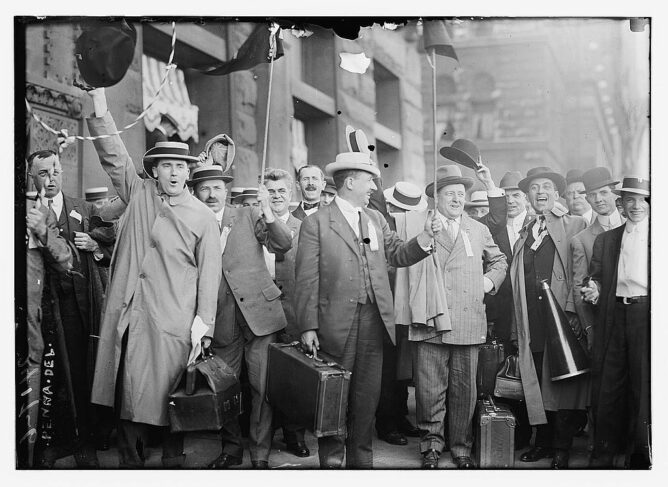
black and white photo of men in suits and pork pie hats celebrating

I’m at the point in my career where I can look back and see trends. I can vividly remember my early obsession with professional networking (2009-2011), the deep dive into critical pedagogy and instruction (2011-2015), the slow rise into outreach (2015-2017), and the crossroads that led to management (2018-present). Assuming I retire between the age of 60-65, this means I am just approaching the half-way point.

That’s a sobering realization.

And it leads me to think “what’s next?” I’ve been invited to apply for associate dean and AUL positions. I don’t yet know if that’s the direction I want to go. I’ve also considered stepping back from management to focus entirely on strategic communications and assessment. I’m not sure that’s a direction I want to go either. Frankly, I’m undecided on what my immediate next step is.

And that’s OK.

What I do notice, however, is an emerging fascination with the professionalization of outreach work. Within academic libraries, there are certain areas of work that are highly professionalized: e.g., reference and instruction, special collections, collection development, e-resources management, and systems. Basically, if there are multiple annual academic conferences dedicated to your line of work in libraries, you can consider your area to be highly professionalized. Also: multiple academic journals on the topic; multiple ACRL sections and interest groups; and professional competencies.

Outreach librarianship, as a stand-alone position, emerged alongside distance education librarians at the dawn of the internet in the 1990s and early 2000s. So in the grand history of academic librarianship, it’s one of the younger specializations. We do have academic journals and we just recently adopted professional competencies, but we are no where near the level of professionalization that, say, reference librarianship or collection development work is at. 

Outreach librarians take many forms: student engagement librarians, communication librarians, first-year experience librarians, various forms of liaison work, management, and instruction-adjacent positions. We also wear many hats, everything from program development and community engagement to marketing and social media strategy. Some are housed within reference and instruction departments, user services teams, or administration; others (like myself) are stand-alone departments. 

With what remains of my career, I think that I want to continue to professionalize the work that outreach librarians do. Developing standardized assessment protocols. Advocating for the hiring of uniquely qualified and skilled individuals. Championing the work of academic libraries that support notable outreach projects. I’m doing some of this work already as the Marketing Column editor for Public Services Quarterly and as a board member of the Library Marketing and Communications Group.

To those ends, these are some of the projects I’d like to work on:

  • Co-lead research that helps to further codify academic library outreach as its own LIS subfield
  • Help to build a robust set of outreach assessment tools
  • Form a community of practice around academic library ROI, storytelling, and communicating value
  • Formally highlight notable examples of successful academic library outreach (see also: RIAL)
  • Write a new book on academic library outreach 
  • Develop a new toolkit for library outreach (let’s bring back the ARL SPEC kits!)
  • Co-teach a course on academic library outreach 

Just to name a few.

Not that I have the time for any of this right now, of course; but as I look at the next 20-ish years of my career, I do want to start moving towards “the next thing.” And if that can be something that leaves an impact on the future of the profession by making it possible for more folks to pursue outreach librarian work along pathways that feel supported and well-trodden, that would be worth the journey.

banner image: Penn[sylvania] Delegation (via library_of_congress on flickr)

Shortly after I started working at Loyola Marymount University in fall 2015, I started writing regular posts for ALA’s Programming Librarian website. Between 2016-18, I wrote fifteen short articles for the site on topics that included social media, program development, exhibitions, external communications, and project management

I had almost forgotten about these until recently when someone shared one in a Discord group and I realized that my byline on all the posts had been accidentally removed during the site’s latest redesign. It was a surreal moment where I said to myself, “Hey, that sounds like something I would write. Oh wait, I DID write that!” (Note: ALA was super great about getting my byline added back)

As much as I cringe to read my own writing, I do love seeing the early emergence of programs (like LMU Speaks, the Long Night Against Procrastination, and Banned Books Week) and processes that I still maintain to this day. The conditional formatting in Excel post featured a spreadsheet that I first developed in 2017, have greatly expanded and modified since, and still check daily to see what external communications need to happen this week.

At the time I wrote these posts, I was still new to the position; and “the outreach team” had not yet become an official library department. Not surprisingly, our procedures are more advanced and codified than they were in 2016 and exist on a foundation that is more than a decade in the making. So much so that recently I had the realization that were I to hire someone onto my team, they would (1) need to come with a few years of full time outreach and communications experience just to keep up but (2) would be plugging into a fully-built machine.

My team has as far to go as we have come (if not farther), but it’s nice too reflect upon the progress we have made to date. Here are all the posts, in chronological order:

  1. Collaborating with Galleries: A Blessed Match (2016, March 28)
  2. When Library Student Workers Take Over Instagram (2016, April 28)
  3. Curating and Cultivating Exhibitors (2016, May 26)
  4. Building on Millions of Tiny Shoulders: Tips for Hosting a Wikipedia Edit-a-thon (2016, July 2)
  5. Time to Meet Your New Faculty! (2016, August 2)
  6. Keeping It All Together with Trello: A Project Management Tool for Library Programming (2016, September 2)
  7. Subtle Nudges: Reminding Your Audience about Upcoming Events (2016, October, 3)
  8. Assessing Transformative Programming (2016, December 1)
  9. Program Marketing for a Campus Community: Two Quick Tips (2017, January 18)
  10. LMU Speaks: Developing a Storytelling Program from Scratch  (2017, March 15)
  11. Hosting a Long Night Against Procrastination (2017, May 25)
  12. Keeping Tabs on Deadlines with Excel’s ‘Conditional Formatting’ (2017, June 28)
  13. 5 Quick Ideas for Banned Books Week (2017, July 27)
  14. Archiving Library Events: Telling Your Library’s Story (2018, January 11)
  15. Promoting Your Event: A Timeline (2018, February 28)

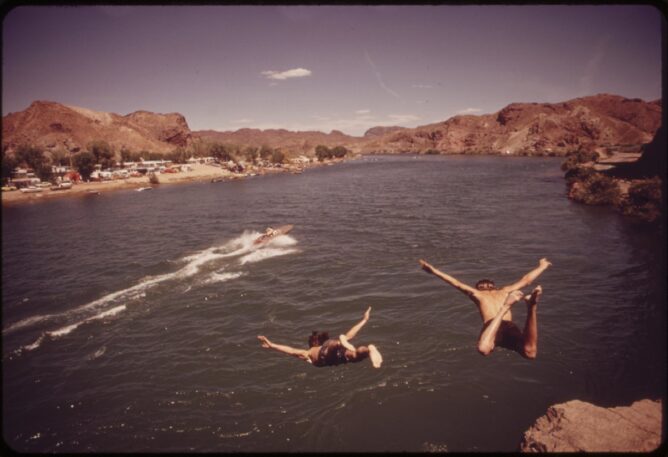
two divers over a lake

I am interested in the future because I expect to spend the rest of my life in the future. Charles F. Kettering, quoted in the L.A. Times, 19 July 1939.

Recently, I was invited by Angela Hursh, manager of engagement and marketing for NoveList and owner of the “Super Library Marketing” blog, to give my predictions for what 2026 will bring to library marketing. It was an honor to have my thoughts sit alongside other notable library marketing folks. I was the only academic librarian included in the piece. So doubly honored! If you haven’t already, jump over to Super Library Marketing to read the entire post.

Library marketing in academic libraries shares some similarities with marketing in public libraries, but there are significant differences. Our audience tends to be more narrowly confined by age and education level. We also have high user turnover: as much as 25% of our population leaves each year to be replaced with new users. Moreover, we usually only get to work on building connections with them for 2-4 years before they cycle out of our system completely. On the flip side, they can often function like a captive audience, depending on how integrated the library is with the curriculum. The communication landscape of a university is also dense, with plenty of opportunities for cross collaboration between departments. 

All this to say, my additions to Angela’s piece might benefit from some additional context, especially since I came at this from the perspective of an academic librarian. So below I’ve included my quoted sections of the original post, followed by additional commentary (that wasn’t included in my original contributions but were certainly in the back of my mind while writing them).

Prediction: “In 2026, social media will be more about connection than reach.”

My Quote: “It will be a challenge for libraries to engage with users who rarely step beyond those private spaces, [e.g. groups chats and DMs]” states John. “Combine this with algorithmically defined feeds, and now you have a situation where a library’s content may never get any eyeballs unless it can simultaneously ‘stop the scroll’ and be worth sharing. I expect this will drive library marketers to create content that is intentionally designed to be shared across platforms (i.e., there’s some social benefit to the user if/when they share the library’s content), but that may also leave marketers in the dark concerning assessing the true impact of any digital campaigns.”

Commentary: Being successful on social media is more difficult than it used to be. Platforms no longer offer chronological feeds. The FYP is the new default. The only way for me have a chance at getting student eyeballs is to (1) create content that impresses the algorithm or (2) create content that has a high benefit-to-share ratio. The second of these is easier to create, though perhaps more limiting. Libraries that can achieve 1 and 2 simultaneously will be the most successful and it’s one of the reasons I rely on shares/sends to measure social media success. However, once it leaves the platform (e.g. gets shared to the group chat), it becomes impossible to track so the true extent of the word of mouth will be unknown. 

Prediction: “Libraries that invest in marketing as essential infrastructure, rather than an add-on, will be better positioned for sustainability and trust.”

My Quote: “Smarter marketing, building connections, hyperlocal relevance: none of this will be possible without content strategists and content creators who have the right skills, experience, staff, and equipment to bring this to bear,” contends John. “It behooves library administrators to commit when it comes to external communications. It’s not enough to have an amazing library. You’ve got to keep selling it, over and over and over and over again.” 

Commentary: If you build it… they probably won’t notice. It is the year of our lord 2026. We should not be having to explain why marketing, communications, and outreach are essential functions of the academic library. The pitfall that I see most academic libraries fall into is that they assign these essential functions to non-professionals. A committee, student employees, the newest hire, the most eager employee. Not that these folks are not capable, but quality marketing and strategic outreach comes from experience and skills. The library’s place within the campus ecosystem and student life is not a given. We need skilled storytellers who can capture hearts and minds. So if you want to succeed in this area, hire and staff like you mean it. 

Prediction: “The most effective library marketing in 2026 will make people feel seen, supported, and welcome, not just informed.”

My Quote: “The media success of libraries like Columbus Metropolitan Library and Los Angeles Public Library is going to drive more libraries to invest in creative storytelling,” he says. “The libraries that can muster the right amount of creativity, leadership, and resources will focus on slow storytelling (think: Craighill or Planet Money) and serial content (think: “Roomies” by Bilt or “Chit” by Jay Renshaw). This will likely drive libraries to mimic each other on social, so the challenge for any library content creator will be to find a way to rise above it all and deliver content that is both uniquely entertaining and directly relevant to their communities.”

Commentary: Your website is not a bulletin board. Your e-newsletter is no a bulletin board. Social media is not a bulletin board. Our library users and our staff need to be the center of our messaging strategy. Whether it’s through highlighting library fans or turning your staff into main characters, folks are looking (1) to be entertained and (2) to form parasocial relationships with the organizations they love. As library marketers, we are tasked with wooing our audiences through connection, understanding, and just the right amount of spice. You can’t “template” marketing. If it were that simple, companies would not pay six figure salaries to content strategists and “storytellers.” If anything, using templates or following a formula is exactly the opposite of effective marketing because the entire point is to rise above the noise in order to connect what your users want to what you have to offer. Each library has unique campus communities to appeal to, so invest in both taking the time to understand those communities and hiring folks best skilled to foster those connections through creative outreach.

What I’m reading 

The Age of Academic Slop is Upon Us by Seva Gunitsky: “It seems people were using AI to generate terrible manuscripts and then shotgun-spraying them across the academy with little regard for quality or fit […] And these papers won’t be bad. They’ll be narrowly useful, methodologically sound, and for the most part not very interesting.”

Behind the Scenes with Milwaukee Public Library’s TikTok by Hannah Arata: “Each video, whether it takes 10 minutes or seven hours to create, becomes an invitation for someone to rediscover their library or step inside for the first time. As MPL continues to experiment and learn from its data, staff are proving that libraries can be both rooted in tradition and innovation.”

We’re not nostalgic for 2016 — we’re nostalgic for the internet before all the slop by Amanda Silberling: “As AI increasingly encroaches on everything we do on the internet, 2016 also represents a moment before The Algorithm™ took over, when “enshittification” had not yet reached the point of no return.”

Links to the past 

  • 1 year ago: Duke University’s Lilly Library was getting “cored like an apple.”
  • 5 years ago: My library was winning the ACRL Excellence in Academic Libraries Award!
  • 10 years ago: I started task blocking my days. I still do this and it’s the only way I’m able to get as much done during my week as I do.
  • 15 years ago: I was singing the praises of online education. If I only knew what the next decade would bring.

Overheard online 

Recently I logged in to the photo app and the short form videos were ALL about #Godzilla. Hadn’t seen anything related on that app in a while so who knows why, but I am happy about the result. @Anneheathen on Mastodon

banner photo: Diving into the Colorado River at “Parker Strip,” a favorite swimming spot of southern Californians and Arizonians, April 1973 (source: U.S. National Archives on flickr)

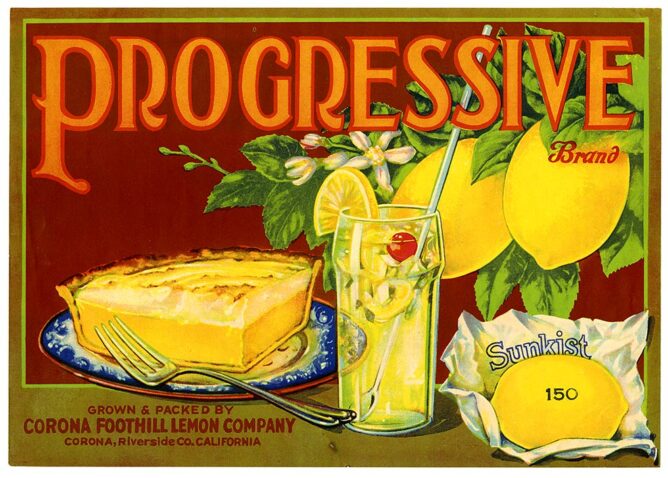
ad for progressive brand lemons, with lemon pie, lemonade, and lemons

A salesman is got to dream, boy. It comes with the territory. Death of a Salesman, Arthur Miller (1949)

We made it through the first quarter of the 21st century. By the skin of our teeth, if you ask me, and we’re still holding on by a thread. 2025 wasn’t a spectacular year for me personally, but it also wasn’t the worst I’ve experienced. I had some small wins at work. Some bigger wins at home. Let’s call it a rebuilding year. 

2026, on the other hand, may prove to be a doozy. I’m scheduled to go up for full librarian. Our university is under new management. And I’m currently signed on to two major libraries projects: developing a marketing kit for open educational resources and helping to re-launch Project CORA. My team was also cut 25% so I’m doing the proverbial more with less. So it goes.

As is customary this time of year, I’ve been thinking about where I want go and how I want to be in 2026 (or, how I want to go and where I want to be). I saw a post recently where the author “manifested” their professional hopes for 2026. I liked the format so here I go. Here’s what I’m hoping to manifest for 2026:

  1. The “Recently in Academic Libraries” posts really pop off and I can justify spinning those into a regular Substack or Patreon newsletter.
  2. We assemble a team of academic library marketing/outreach folks to conduct hardcore research that helps codify library marketing/outreach as its own LIS specialization/subfield. 
  3. The academic library marketing folks build a vibrant online community (preferably not on Facebook).
  4. I’m invited to give a keynote about marketing and outreach in academic libraries.
  5. Some academic library—doesn’t have to be mine—starts going viral on the regular in the same way that LAPL and Milwaukee Public have, drawing attention to the role we can play as cultural shapers.

It should be apparent from the above that one of my current obsessions is the professionalization of academic library marketing and outreach work. I’ll admit it: I’m somewhat jealous of my colleagues in public libraries, museums, and other cultural institutions who are doing amazing marketing work and who are rightfully drawing national attention for it. As an outsider, it appears that marketing and outreach work in these organizations is treated as more essential to strategy and operations (though, I’m sure it doesn’t feel like that from the inside!). I want to see that success—and the support that that success requires—manifested in academic libraries as well. 

What I’m reading 

Why AI Didn’t Transform Our Lives by Cal Newport. “Such breathlessness now seems rash.” The AI agents that so many in tech said would revolutionize our lives are surprisingly incapable of simple tasks. Or, to put it differently, living and thinking in meat space is far more complicated than we give it credit for. 

The State of Library Marketing 2026 by Angela Hursh. The #1 challenge for respondents to Angela Hursh’s annual survey is time and capacity:  “41 percent of respondents stated they feel they lack the time or resources needed to perform their jobs effectively.” I definitely feel the stress of all five challenges highlighted. 

Research as Leisure Activity by Celine Nguyen. “I truly think that autodidacts are responsible for all that is good and great about alternative culture.” When I finally win the lottery and no longer need to work for a living, I look forward to spending my days as a leisurely researcher. 

Links to the past 

  • 1 year ago: I think about this quote at least once a day. 
  • 5 years ago: I set out to write every day. Hm, I should do that again.
  • 10 years ago: I’m still “the guy who wears the bow ties.” Why stop now?
  • 15 years ago: Some advice from ALA Midwinter on personal branding online. Most of this still holds up! 

Overheard online 

ways you can tell I am in fact a trained librarian  despite the unusual career path: just sent a text which included the phrase “✨ structured metadata ♥️” @thatandromeda on Bluesky

banner photo: Lemon crate label, Progressive Brand, Lehmann Printing and Lithographing Co. (on flickr)

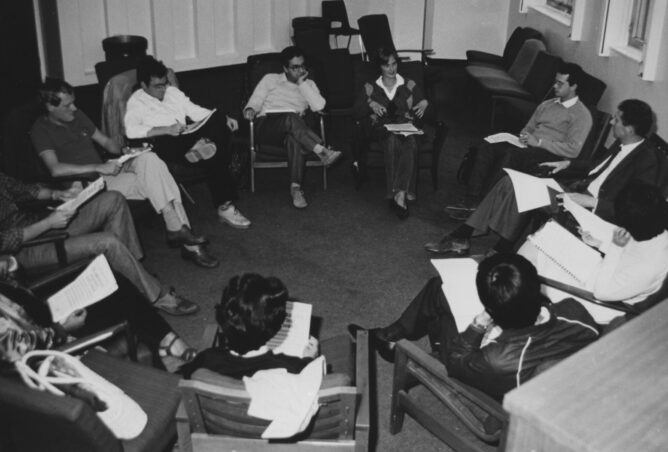
group of students sitting in a circle talking and taking notes

It takes a great deal of history to produce a little literature. Henry James, Hawthorne (1876)

I have been creating content for academic libraries for more than a decade. The definition of “content creator” has changed significantly in the past ten years, especially since the emergence of TikTok, and expanded to include a set of skills and activities that have exceed what I ever imagined I would be asked to do. To effectively market academic libraries these days, you need graphic design skills, video editing chops, an eye for photography, a knack for writing everything from blurbs to long-form reports, an understanding of how social media algorithms work, and web design. And that’s only including what’s needed for making digital content, to say nothing of print, or the more relationship-centered work that is generally considered “outreach.” The job is far more complex than one person would normally be expected to handle; though, out of necessity, many do. 

Perhaps this is why lately I’ve been dreaming of having a writers’ room to help develop library content. No, not a committee. This isn’t a service opportunity. Successful entry into the writers’ room would require some minimal level of aptitude, either in writing dialogue or developing storylines. So, still a low barrier to entry, but not necessarily a situation in which anyone would succeed just by virtue of being a library employee. And unlike a committee, the writers’ room would need to meet frequently, like two to three times weekly, to keep the creative momentum.

Suffice to say this isn’t a workflow that would likely survive in academia, but for a brief moment, I had something like this within my team. Last semester, our student employees would regularly hang out in our office suite before/after their shifts or between classes. Our conversations often found their way around to works in progress. It was in these moments that I could see the potential for regular pitch-and-workshop sessions around natal ideas. Many content ideas came out of these conversations (which, of course we didn’t actually work on until folks were back on the clock), driven by the diversity of life experiences, FYPs, and cultural references. Ideas that (1) developed at a faster pace and (2) I would never have developed on my own, or that would have seemed poor were it not for the enrichment of others’ perspectives. 

I want more of that.

What I’m reading 

🤖💥😳 Our Shared Reality Will Self-Destruct in the Next 12 Months by Ted Gioia: “At the current rate of technological advance, all reliable ways of validating truth will soon be gone. My best guess is that we have another 12 months to enjoy some degree of confidence in our shared sense of reality.” Well, that’s a fun thought. 

🍊💀🌐 President Trump Is Alive. The Internet Was Convinced Otherwise by Katie Rogers. This was my primary source of entertainment over the holiday weekend. It’s classic conspiracy theory, but the ride was delightful and I loved every minute of it.

🔧📞🪙 An engineer restores pay phones for free public use by Julian Ring. Please normalize this. Maybe if we bring back pay phones, we can all leave our phones at home more often. 

Links to the past 

  • 1 year ago: I was complaining about committees (Still am. See above) and urging for more intentional support structures for library outreach and communications work. 
  • 5 years ago: Nothing. Apparently I was taking a long sabbatical from blogging in 2020. Huh, wonder why.
  • 10 years ago: I was preparing to move to my new job at the William H. Hannon Library.
  • 15 years ago: I was in the middle of my MLIS program and looking to answer that essential LIS question: What is information?

Overheard online 

Thank goodness we’re going back to the good old times before… *checks notes* medicine @beyondmeat on Threads 

banner image: Seminar Group, c1981 (lselibrary on Flickr)

moose dressed in a sweater in a library

Social media happens so fast. I mean, just over a week ago, none of us considered making a banana peel part of our morning routine. So in between the monthly “Recently in Academic Libraries” posts, I pull together regular updates on what AcadLibs are doing on social. Please enjoy these recent highlights. 

Always check the calendar

Academic libraries stepped up their game this year for April Fools. Perhaps I wasn’t as attentive in the past, but I noticed more accounts engaging in what was obviously planned content for this internet high holy day. Carroll University Library pulled a blast from the past and decided to shrink all their books. Amherst College Library introduced their campus’s first silent dorm. Cornell University Library took flight with its latest mobile branch.

I honestly had to do a double take and remind myself what day it was with American University Library’s new coffee ad as well as Boston College University’s latest collection development priority (spoiler: it’s dolls).

The most popular trend by far was the inclusion of animals. Both Wash U and William & Mary offered therapy dogs for checkout. Not to be outdone, LSU advertised therapy tigers. And the University of Albany began lending horses. Animals became librarians as well. Catholic University Libraries hired Catalog Mary McCatFace and the University of Idaho hired the first ever moose librarian (seen above).

But the post that shocked me the most was this one from Sacred Heart University. Nope, nope, nope.

Poking fun at ourselves

Recently at my place of work, we’ve been experimenting with creating more engaging content that reminds students about our library’s policies, but in ways that feel non-confrontational (e.g. logging out of library computers, not taking our staplers, and not being too loud in study rooms). So I enjoyed seeing similar tactics employed by University of Wyoming Libraries to recognize difficult wayfinding needs. But it was K-State Libraries who hit the nail on the head with their gentle shaming of students who leave their belongings unattended in the library. So trusting!

@kstatelibraries

We’d ditch everything to get a treat from Cornerstone Café #kstatelibraries #collegestudent #relateable

♬ original sound – K-State Libraries

I feel pretty

Anytime I am struggling to come up with a piece of content, I know I can always count on beautiful photography and high-quality b-roll to carry the day. This is what makes UNC Greensboro’s mindfulness moment” work so well, as well as Georgia Tech’sgo to the library.” But it has been the recent “not my house” trend that really gave libraries a chance to re-use some of those stellar shots. Here it is by Mizzou Libraries and Yale Libraries. Similarly, the “get me to god’s country” offers the same opportunity, as demonstrated by UC Santa Barbara Library.

And finally…

Someone had to do it. Not at all surprised to see Utah Valley University be the one to take the plunge.

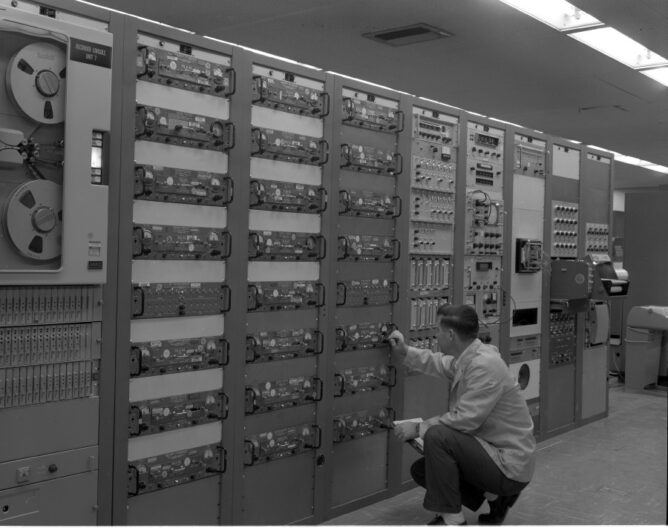
man with clip board inspecting a magnetic tape machine

When it comes to communications and outreach work, I think we often fall prey to the availability bias. This is the tendency to favor what is right in front of you, or what is most readily called to mind, and to assume it is the right or best available option. Case in point: Recently I was having a conversation with my team about how to best promote an event. Someone chimed in with “Put in on the homepage. That way everyone will see it.”

Breathe in.

As librarians, we see our homepage every day. It’s where we often start when helping students with their research. It’s how we most readily access our policies documents and forms. It’s where we go to look up another librarian’s contact information (because for some ungodly reason that information isn’t readily available in Outlook). 

Unfortunately, that’s not how non-librarians and staff experience our website. When most users come to our homepage, they immediately click on “Hours,” “Group Study Room Reservations” or the library catalog search. Most never scroll below the fold to see any of the promotional material posted there. Moreover, the 25% of users who access our site on handheld devices don’t see the promo content because it’s hidden in the mobile interface. A whopping 0.02% of users click on the promo material on our homepage.

That promo material has a purpose, but it’s not there to drive traffic (that’s a story for a different post). The point to understand is that the data doesn’t support the assumption that the homepage is a highly visible space. Or more specifically, that high visibility leads to conversion. It’s not like digital platforms such as Spotify or YouTube where users hang out for long periods of time, and which can use banner ads and takeovers: on our homepage, users are on their way to somewhere else and rarely come back in a single session.

The same could be said of fliers posted in the library. We walk by these spaces multiple times a day into and out of work, on our way to the bathrooms, or to a meeting. But that isn’t how most users experiences our spaces. Most users pop in to quickly grab a resource, to print something out, or to meet up with friends in a study room. At best, they might make two passes by a poster or a flier, and usually on the way to somewhere else. There are effective ways to use print media in a library context that might catch a student’s attention, but they don’t include a flier posted to a wall or sitting in an acrylic holder on a service desk. 

This isn’t to say that the library homepage and fliers are not somewhat effective. Perhaps in the “long tail” of library outreach, they do make a difference, especially over longer periods of time. But if we’re using metrics like engagement per visit, the numbers are essentially zero. 

Intentional outreach like email marketing, tabling, word of mouth via faculty, and social media (to an extent) are far more effective methods. The number of people I can get to scan a QR code to register for a workshop by talking to them 1:1 at a tabling event, or to click on an e-resources link in a personalized email, or engage with an entertaining social media post reminding students about a library policy, is far higher than any website embed or printed flier. Again, this isn’t to say those latter methods don’t move the needle at all, but our faith in their efficacy is grossly overestimated, I suspect, due to our overfamiliarity with them. 

I might even go so far as to suggest that passive outreach, like fliers and website posts, is more about making us feel better. We feel we’ve done something. We can brush off ours hands and go home. Promotion achievement unlocked! But the data doesn’t hold up. To effectively connect with students and faculty, you need intention. You need strategy. You need a plan. And you need to follow the data. 

Breathe out.

What I’m reading

🫣🇺🇸✏️ The Erasure of Diverse American Histories by Trevor Dawes. “American history is not a single narrative but a complex tapestry of interrelated stories. When we attempt to simplify this tapestry to showcase only certain threads, we not only do a disservice to historical accuracy but also deny future generations the full understanding of how our nation developed through the contributions of people from all backgrounds.”

🤝👊🏛️ Colleges Face a Prisoner’s Dilemma by David Asch. “If universities can see past the outcomes of any single encounter, and can reawaken the mutual trust they have long operated with, they may reset the terms of engagement between higher education and the state”

Links to the past

  • 1 year ago: At least one of these books is still in my TBR pile.
  • 5 years ago: I was only just beginning to understand what quarantine would do to my work-life balance, but I was coping as best as I could.
  • 10 years ago: I was publishing, presenting, and (most importantly) building a Battledecks competition for ACRL 2015. We should bring those back.
  • 15 years ago: I was reading André Cossette’s “Humanism and Libraries.” Wow, this is the first time I’ve added the 15 year marker to this section!

Overheard online

If they make a John Wick 5, I want it to be set in afterlife and Wick is contracted by the ruler of said afterlife to kill renegade demons/spirits. The payment is to be reunited with his wife and the puppy from the first film. The final scene shows him opening his wallet to look at his newly resurrected identity and it says John Constantine. — @fskornia on Mastodon 

banner image: Atlas Negative Collection Images on flickr

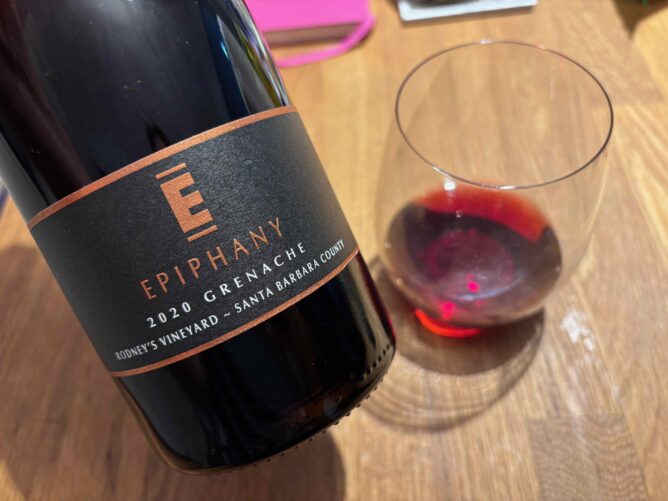
Bottle of Epiphany 2020 Grenache and wine glass

It’s been a minute since I posted a wine tasting review! I’ve spent the last month experimenting with classic martini recipes and not paying as much attention to my first love, grapes. So it was refreshing to come back to something local with a distinct California flavor.

On the nose, there is raspberry and chaparral. Light to medium bodied, with hints of oak, rose water, and tart fruit. Maybe licorice as well? Good tannin balance and a tight/focused structure and a delicate finish. I would pair this with cheese and almonds. Possibly a light chocolate. Great to drink right now, but you could also hold back for 3-5 years.

black pub holding a tennis ball chew toy

“Have mercy now, save poor Bob, if you please.” Robert Johnson, Cross Road Blues, 1936

I am at a crossroads. If I decide to stay in academic libraries, I am well-positioned at this moment to either (1) move into a more administrative/leadership role or (2) move into a more creative, content development role. I have enough experience and have built enough skills in both areas to pursue one or the other more deeply and each offers a path to greater satisfaction at work. Regarding the former, I enjoy managing large, complex projects and supporting a team of skilled employees. Regarding the latter, I also enjoy delving into creating something that is fundamentally unique to my talents. 

In my current position, it seems unlikely that I would have the space or resources to pursue both paths simultaneously. Still, I’ve been thinking about what it takes to be successful in either role: a good manager and a good content creator. What follows is a short list of attributes/habits that I find useful. Perhaps I’ll be utilizing one of these sets more fully in the near future. Or perhaps I’ll continue to cultivate both to the best of my ability. 🤷‍♂️

Tips for being a good manager

  • Your employees don’t support you; you support them. Start every day by asking your team “what do you need?” 
  • Start from a place of curiosity, not criticism. When your team comes to you with an idea, begin by framing it this way: “this could be successful if…”
  • Make your team part of the story. Regularly tell your team how their work fits into the bigger narrative. 
  • And then, give them the space to write it their own way.
  • If you have to say no, try to think of at least one thing that would “get you to yes.” That might not change your answer, but it could change how you both approach the issue.
  • Always assume your employees want to be as successful as you do.
  • Staying informed is a two-way conversation. You shouldn’t rely entirely on your team to keep you in the loop. At the same time, they shouldn’t rely entirely on you to follow up on things. It’s a relationship and it takes both parties to do the work.

Tips for being a good content creator

  • Constantly be learning new skills and closely examine what the best in the field are doing.
  • Block out your schedule so you can have longer periods of uninterrupted work.
  • Keep the number of projects on your plate as small as possible. Three is good rule of thumb.
  • Focus on quality even if it takes more time. This is what will set your work apart from others’… not how “responsive” you are to emails. 
  • Have a standard workflow but be willing to abandon it if you have the option for uninterrupted focus time.
  • Never skip the pre-production stage. Plan, plan, plan.
  • Whatever step in the creative process you’re avoiding, that’s where you’ll find joy. 
  • Take a break if it’s no longer fun. There’s no problem a good walk can’t resolve.

What I’m reading 

🧑‍💻🏴‍☠️🪴 Why Personal Websites Matter More Than Ever by Joan Westenberg. “Personal websites matter – now, more than ever – because we can see, clearly, with our own eyes, what happens when a handful of companies control and own the medium and the message. It gets silenced, suppressed, and subtly reshaped without us.”

🧑🏽‍🏫✊🏽🎓 The Authoritarian Endgame on Higher Education by NYTimes. “For people in higher education, this is a moment both to be bolder about trumpeting its strengths and to be more reflective about addressing its weaknesses. […] University presidents seem to be hoping that if they keep their heads down, the threat will pass — or at least pass by their campus. They are unlikely to be so fortunate.”

Links to the past 

  • 1 year ago: I was singing the praises of using email marketing for outreach to college students. Some folks interpreted this as “libraries don’t need social” but that’s not what I said. Social media, as I’ve shown in recent posts, has a significant impact on how students view the library’s role on campus and how they feel about it. Feelings matter. Even if they can’t be quantified. 
  • 5 years ago: Nothing. It was March 2020. 🦠 I wasn’t focused on blogging at the time, though in hindsight I wish I had been.
  • 10 years ago: I was doing the “Day in the Life of a Librarian” post. We should all do that again.

Overheard online 

This historian gives you explicit permission to delete and destroy each and every bit of data (pun intended) that can put you or others in danger. Lives Saved >>> Historical Record Preserved @lavaeolus on Mastodon

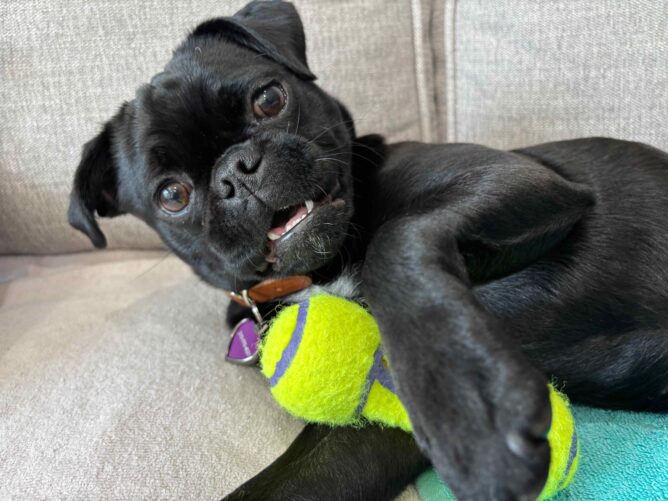
banner photo: Meet Poppy, the newest member of the family.

My colleague Ray Andrade and I recently published an article on our outreach successes (and some failures) with first-year college students. We utilize a home-grown mix of programming, communications, and 1:1 connections to foster student engagement.

Starting with the knowledge that using the library within their first semester at college is correlated with academic success, the outreach team and the Hannon Library have employed a variety of tactics to get students in the door. By creating engaging orientation videos, promoting the library at in-person campus fairs, fostering word of mouth by working directly with niche communities, leveraging existing communication channels and email marketing, and hosting an open house early in the semester, we have cultivated an ecosystem in which the library’s brand can take root and thrive.

Read the whole article at Marketing Library Services (now integrated with Computers in Libraries).