Social media happens so fast. I mean, in just over a week, we went from simply touching grass to being grass. So in between the monthly “Recently in Academic Libraries” posts, I pull together regular updates on what AcadLibs are doing on social. Please enjoy these recent highlights.

Bad Bunny memes

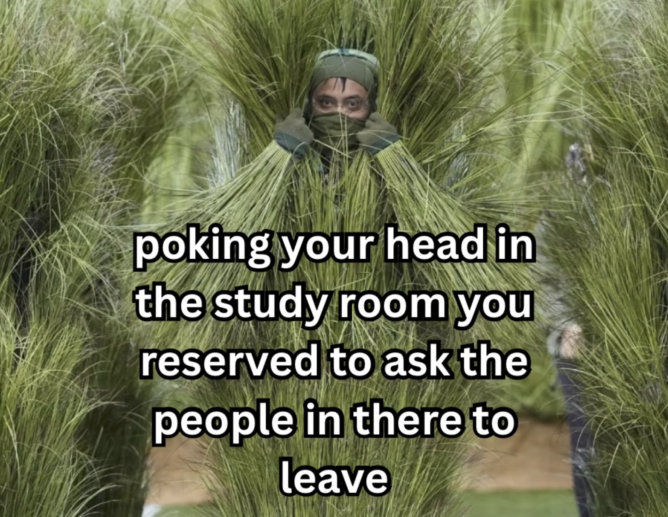
Moments of mass- /mono-culture are few and farther between these days, but leave it to libraries to take advantage of the ones that remain! A number of academic libraries, including Bass Library at Yale, UVU, University of Florida, Clemson, and Florida State University (seen above) used photography and stills from the Super Bowl to promote library services and collections. This year’s half time show did not disappoint and provided plenty of fodder for the meme cannons. 

Scrapbooking a campus tradition

If your campus has an annual tradition with decades of photos behind it (the more raucous the better), check out what Dartmouth Libraries did to highlight their annual Polar Swim. I love the scrapbook vibe (easily pulled off with a little background remove magic). Be sure to connect with your campus alumni organization or the main uni social for the collab opportunity (and remember: let the bigger account initiate the collab). 

Animated gif drop

Does this meme have a name? It’s giving Vine. From Penn Libraries.

Library cart ride along

Honestly, I’m surprised I hadn’t seen this format used by a library before now. So many academic libraries have golf carts for moving books around campus. It’s the perfect opportunity to create short, fast-paced content, provided you’ve got a witty host. The sound effects are fun. Very “Cash Cab” vibes. From University of Florida Libraries.

Be the main character

Currently, I’m working on a presentation about social media in academic libraries and one of my top recommendations is to “become your own main character.” Too many libraries treat their social like bulletin boards with no clear or consistent voice. Instead, I suggest they embrace the serial approach and feature a regular occurring cast. I think Emerson College Library is doing this well by featuring the same folks (Molly) in all their recent content. See also: University of Wyoming Libraries and William and Mary Libraries.

https://www.tiktok.com/@emersoncollegelibrary/video/7602718387294244127

illustration of a 19th century cottage

Social media happens so fast. I mean, just over a week ago, we were still talking about #ConformityGate (aside: How are y’all doing? You ok? 🧇) and none of us were talking about the cottage. So in between the monthly “Recently in Academic Libraries” posts, I pull together regular updates on what AcadLibs are doing on social. Please enjoy these recent highlights.

Ins/outs 2026

The “Ins and Outs” trend really peaked last year, but I think it has a couple years left in it before it becomes old hat. We did it at my library and so did UC Santa Barbara, University of South Florida, and DeSales.

Another library’s treasure

I love exhibitions about discarded objects: left-behind water bottles, items left in the return bin, and in the case of UNC Library, objects found in library books. The gentle soundtrack and collage aesthetic is perfect for this time of year: cozy and comforting. For libraries that save found objects, this would be an easy post to replicate and one that might find a happy audience among college alumni. (But wait, did that say “send feet pix?”)

BRB, going analog

According to some cultural weathervanes, analog is cool again. As a librarian, older formats never lost their charm for me, but I’m delighted to see younger generations discovering the joys of physical media. Fresno State Library is highlighting its Media Lab with this post, as well as its collections of CDs and LPs. It looks like the students/staff in this carousel had some fun doing the photoshoot as well. Man, I had that Lauryn Hill album and I wore it out. 

Here’s your sign

This is a perfect start-of-the-year format for any library. If you’ve only got one library building, find 12 spaces or services to highlight. If you’ve got multiple campus libraries, even better. If you’re not an expert in astrology, consider consulting someone who knows a little more about the culture and practice around it. From Yale Library:

Oh so pretty

Carousels are having a moment. Again. Honestly, it feels like we’ve been coming back to the carousel format repeatedly over the past 2-3 years. Folks just love to swipe through photos. So what better time than the start of the new year to pull together some of your best library pics. This one from the University of South Carolina was my favorite, but see also: University of Cincinnati, Arizona State, UT Arlington, University of Alabama Arlington, Syracuse, Grand Valley State, Dartmouth, Cornell, and Colorado State (with sad music).

And finally…

This is your annual reminder to save all your b-roll this year so you can create recaps like this one from Kansas State University Libraries.

banner image: detail from the “The Cottage of Content, or, The Right Roads and Wrong Ways,” an 1848 board game published in London by William Spooner (source)

group of students sitting in a circle talking and taking notes

It takes a great deal of history to produce a little literature. Henry James, Hawthorne (1876)

I have been creating content for academic libraries for more than a decade. The definition of “content creator” has changed significantly in the past ten years, especially since the emergence of TikTok, and expanded to include a set of skills and activities that have exceed what I ever imagined I would be asked to do. To effectively market academic libraries these days, you need graphic design skills, video editing chops, an eye for photography, a knack for writing everything from blurbs to long-form reports, an understanding of how social media algorithms work, and web design. And that’s only including what’s needed for making digital content, to say nothing of print, or the more relationship-centered work that is generally considered “outreach.” The job is far more complex than one person would normally be expected to handle; though, out of necessity, many do. 

Perhaps this is why lately I’ve been dreaming of having a writers’ room to help develop library content. No, not a committee. This isn’t a service opportunity. Successful entry into the writers’ room would require some minimal level of aptitude, either in writing dialogue or developing storylines. So, still a low barrier to entry, but not necessarily a situation in which anyone would succeed just by virtue of being a library employee. And unlike a committee, the writers’ room would need to meet frequently, like two to three times weekly, to keep the creative momentum.

Suffice to say this isn’t a workflow that would likely survive in academia, but for a brief moment, I had something like this within my team. Last semester, our student employees would regularly hang out in our office suite before/after their shifts or between classes. Our conversations often found their way around to works in progress. It was in these moments that I could see the potential for regular pitch-and-workshop sessions around natal ideas. Many content ideas came out of these conversations (which, of course we didn’t actually work on until folks were back on the clock), driven by the diversity of life experiences, FYPs, and cultural references. Ideas that (1) developed at a faster pace and (2) I would never have developed on my own, or that would have seemed poor were it not for the enrichment of others’ perspectives. 

I want more of that.

What I’m reading 

🤖💥😳 Our Shared Reality Will Self-Destruct in the Next 12 Months by Ted Gioia: “At the current rate of technological advance, all reliable ways of validating truth will soon be gone. My best guess is that we have another 12 months to enjoy some degree of confidence in our shared sense of reality.” Well, that’s a fun thought. 

🍊💀🌐 President Trump Is Alive. The Internet Was Convinced Otherwise by Katie Rogers. This was my primary source of entertainment over the holiday weekend. It’s classic conspiracy theory, but the ride was delightful and I loved every minute of it.

🔧📞🪙 An engineer restores pay phones for free public use by Julian Ring. Please normalize this. Maybe if we bring back pay phones, we can all leave our phones at home more often. 

Links to the past 

  • 1 year ago: I was complaining about committees (Still am. See above) and urging for more intentional support structures for library outreach and communications work. 
  • 5 years ago: Nothing. Apparently I was taking a long sabbatical from blogging in 2020. Huh, wonder why.
  • 10 years ago: I was preparing to move to my new job at the William H. Hannon Library.
  • 15 years ago: I was in the middle of my MLIS program and looking to answer that essential LIS question: What is information?

Overheard online 

Thank goodness we’re going back to the good old times before… *checks notes* medicine @beyondmeat on Threads 

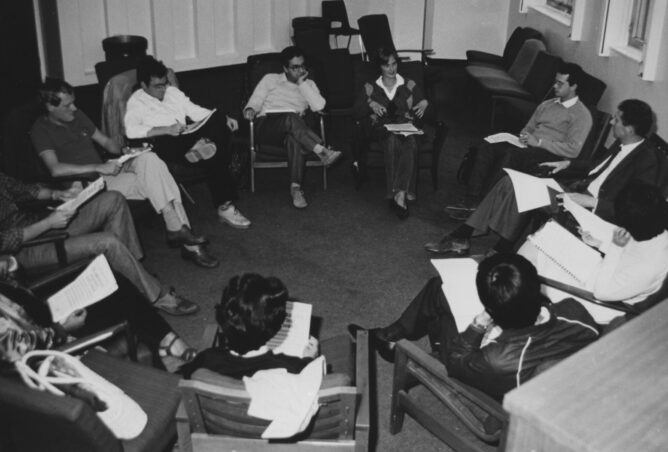
banner image: Seminar Group, c1981 (lselibrary on Flickr)

moose dressed in a sweater in a library

Social media happens so fast. I mean, just over a week ago, none of us considered making a banana peel part of our morning routine. So in between the monthly “Recently in Academic Libraries” posts, I pull together regular updates on what AcadLibs are doing on social. Please enjoy these recent highlights. 

Always check the calendar

Academic libraries stepped up their game this year for April Fools. Perhaps I wasn’t as attentive in the past, but I noticed more accounts engaging in what was obviously planned content for this internet high holy day. Carroll University Library pulled a blast from the past and decided to shrink all their books. Amherst College Library introduced their campus’s first silent dorm. Cornell University Library took flight with its latest mobile branch.

I honestly had to do a double take and remind myself what day it was with American University Library’s new coffee ad as well as Boston College University’s latest collection development priority (spoiler: it’s dolls).

The most popular trend by far was the inclusion of animals. Both Wash U and William & Mary offered therapy dogs for checkout. Not to be outdone, LSU advertised therapy tigers. And the University of Albany began lending horses. Animals became librarians as well. Catholic University Libraries hired Catalog Mary McCatFace and the University of Idaho hired the first ever moose librarian (seen above).

But the post that shocked me the most was this one from Sacred Heart University. Nope, nope, nope.

Poking fun at ourselves

Recently at my place of work, we’ve been experimenting with creating more engaging content that reminds students about our library’s policies, but in ways that feel non-confrontational (e.g. logging out of library computers, not taking our staplers, and not being too loud in study rooms). So I enjoyed seeing similar tactics employed by University of Wyoming Libraries to recognize difficult wayfinding needs. But it was K-State Libraries who hit the nail on the head with their gentle shaming of students who leave their belongings unattended in the library. So trusting!

@kstatelibraries

We’d ditch everything to get a treat from Cornerstone Café #kstatelibraries #collegestudent #relateable

♬ original sound – K-State Libraries

I feel pretty

Anytime I am struggling to come up with a piece of content, I know I can always count on beautiful photography and high-quality b-roll to carry the day. This is what makes UNC Greensboro’s mindfulness moment” work so well, as well as Georgia Tech’sgo to the library.” But it has been the recent “not my house” trend that really gave libraries a chance to re-use some of those stellar shots. Here it is by Mizzou Libraries and Yale Libraries. Similarly, the “get me to god’s country” offers the same opportunity, as demonstrated by UC Santa Barbara Library.

And finally…

Someone had to do it. Not at all surprised to see Utah Valley University be the one to take the plunge.

computer screen with numbers

Social media happens so fast. I mean, just over a week ago, saying that I can’t get anxiety out of my brain meant an entirely different thing. So in between the monthly “Recently in Academic Libraries” posts, I pull together regular updates on what AcadLibs are doing on social. Please enjoy these recent highlights.

The content is mysterious and important

I’m sure we’re not all watching Severance, but it feels like entire world is watching Severance (or maybe that’s just my fyp). Major props to Oklahoma State University Libraries for getting the dolly zoom elevator shot perfect. Over at University of Maryland Libraries, they put together a small set of Severance references to promote locking in at the library. I even jumped on the “outie/innie” trend at my library as a way to subtly poke fun at the things some students do in the library (and yes it’s true that someone actually left an entire bowl of spaghetti once).

Promoting OERs with high-quality content

KU Libraries used both video and still images to celebrate a faculty member who is an open educational resources advocate. The video is a solid interview with engaging b-roll footage, and a good example of what you can accomplish with skilled a videographer. The carousel works equally well, combining good photography with simple branded graphics. Instead of trying to put images and words together in a single slide, KU Libraries posted image, then graphic, then image, giving each its full space. I hope this is part of a series! 

Three pieces of trending content

1. “Last week, I just got two offers for the job that I want.” The J. Willard Marriott Library posted this solidly feel-good video across their socials, encouraging students to find the good in life. It follows on the heels of a trend I’ve seen many universities doing (including my own) but I love the tight camera angle and ASMR-style audio. It takes a familiar trend and makes it more intimate. 

@marriottlibrary

Big or small, every day is filled with good things waiting to be discovered…and these Utes know exactly what that’s about. ❤️ ⬇️ Tag a friend below who brings the good to your day! #UniversityofUtah #MarriottLibrary #LibrariesofTikTok #UofU #Library #College #GoUtes #GoodThings FYP@University of Utah

♬ original sound – marriottlibrary

2. The “subtle foreshadowing” meme is a great way to take advantage of the rule that you have to capture someone’s attention in the first 1-2 seconds of a social media post in order to hook them. It’s an obvious gimmick, but the self-referentiality of the format works. CSU Fullerton’s Pollak Library pied their dean and associate dean as a thank you to donors following a Day of Giving. I really hope that was a student worker throwing the pies. 

3. I am always impressed by libraries that have the time and energy to hop onto the awards season bandwagon by posting timely content. The go-to meme is, of course, the juxtaposition of a book cover with a celebrity’s red carpet outfit. So it was refreshing to see a slightly different take by Georgia Tech Library who used high quality photography and Oscar Awards categories to highlight their library spaces.

And finally…

Ok, Chatham University Library, this is hot.

header image: still from the University of Maryland Libraries Severance parody video

toy tiger at the beach

Social media happens so fast. I mean, less than a week ago the Duolingo owl was still alive. So in between the monthly “Recently in Academic Libraries” posts, I’m hoping to pull together regular updates on what AcadLibs are doing on social. I already have a post brewing about some of my favorite go-to libraries for discovering creative social media work. In the meantime, please enjoy these recent highlights of higher ed libraries on social!

Main character energy

One of the best ways to build a community of followers and encourage them to continually re-engage with your content is to establish familiar characters who over time become instantly recognizable and, if you play your cards right, will nurture their own lore.

For example, I am incredibly invested in the relationship between the team of creators at UCSB Libraries. Their playful mix of behind the scenes content, their self-referential nods, and the way they highlight their collaboration stops me from scrolling past every time a new post hits my FYP.

https://www.tiktok.com/@ucsblibrary/video/7470254310761319726

Of course, you don’t need to use actors if that’s not an option for you. I am just as invested in what the Auburn University Libraries’ toy tiger (his name is Ralph) is up to. Currently, he’s at the beach.

Memes memes memes

In both #HESM (higher ed social media) and wider SMM (social media manager) professional communities, there are regularly discussions about whether to use memes, how often, and for what purposes. Even before the ascendence of short-form video, academic libraries were always shy about using memes, or using them too frequently, but following the rise of TikTok and Reels, I’ve noticed a substantial increase in the AcadLibs trying to capitalize on trending content.

Here are two safe, easy, and evergreen memes that any library could adapt: Carroll University Library using the “Can Ashley change a tire” video meme and the Bass Library at Yale using the “how are you feeling today” meme with still images of architectural features in their building.

Of course, some memes are short-lived or age quickly. I would bet the “college acceptance letter” meme will eventually fall into that category (we can only handle so much emotional tension… plus I think the trending audio for this meme is a tad bit too long). But until then, I did enjoy how Willamette University Library used it to highlight their interlibrary loan services.

Keep it local

At the most recent Library Marketing and Communications Conference in November 2024, Krystal Ruiz and Keith Kesler from Los Angeles Public Library spoke about the importance of highlighting local history in short form video. For libraries especially, it’s the type of content that connects directly with their niche audience. Academic libraries can benefit from this advice: obviously, with university archives materials, but local city/state materials as well. Such as in this Ball State video on local buildings in Indiana.

It’s not just about the stats

Finally, I want to spotlight a recent TikTok from one of my favorite accounts, UVU Library. It’s a simple green screen-style post, but it recognizes an often-overlooked demographic in academic libraries: students who are parents of young children. The post did not perform as well as their other posts (at least not at first: it’s only a day old at the time of this writing), but that’s not important. What matters is that this type of content helps specific members of our community feel seen. Sometimes, it’s about more than shares, sends, and watch-time. It’s about how our content makes our users feel.

@uvulibrary

Student parents, find peace in our family study suite! UVU Parenting Kids Student CollegeLife CollegeHumor Library

♬ original sound – uvulibrary – uvulibrary

header image: Ralph the tiger at the beach

The end of the year tends to bring some of the most interesting writing. And so my tbr list of articles is already longer than Santa’s list. Here’s what I’ve enjoyed reading so far this week.

On regulating AI

“We need trustworthy AI. AI whose behavior, limitations, and training are understood. AI whose biases are understood, and corrected for. AI whose goals are understood. That won’t secretly betray your trust to someone else. The market will not provide this on its own.” 

“AI and trust” by Bruce Schneier

On web analytics

“Lots of likes is an okay-ish signal. Lots of comments is a clearer signal. A small handful of comments or private replies from people saying they’ve never felt so seen or understood by a piece of writing—that’s the kind of thing I’m trying to discern and quantify here.” 

“Measuring what matters” by Rob Hardy

On privacy and college students

“Few institutions collect as much data about the people inside of them as colleges and universities do. Residential campuses, in particular, mean students not only interact with their schools for academics, but for housing, home internet, dining, health care, fitness, and socialization. Still, whether living on campus or off, taking classes in person or remotely, students simply cannot opt out of most data collection and still pursue a degree.” 

“He wanted privacy. His college gave him none” by Tara García Mathewson

On libraries and platforms

“After all, we’re the libraries. We have plenty of experience with corporate entities that don’t reflect our values. We deal with the journal publishers who practice a business model that hoards the world’s knowledge and maximizes profit from the research that our university’s scholars conduct. When it comes to the academic publishing system, institutions of higher learning have made a deal with the devil, and we, the libraries, are the campus units who pay the bill.” 

Why we’re dropping Basecamp” by Duke University Libraries

On social media trends

“In 2024, strategic organizations will push back against unjustified expectations to be on every platform. They’ll unlock their top-performing channels based on ROI, and focus their attention on those—and only those. If they’re really confident (and brave), they might even abandon one or two altogether.”

Hootsuite’s Social Media Trends 2024

On attention

“The platforms that control search were conceived in sin. Their business model auctions off our most precious and limited cognitive resource: attention. […] Critical ignoring is the ability to choose what to ignore and where to invest one’s limited attentional capacities. Critical ignoring is more than just not paying attention – it’s about practising mindful and healthy habits in the face of information overabundance.”

When critical thinking isn’t enough: to beat information overload, we need to learn ‘critical ignoring’” by Hertwig, Kozyreva, Wineburg, and Lewandowsky

wall mural of Kurt Vonnegut

“Every passing hour brings the Solar System forty-three thousand miles closer to Globular Cluster M13 in Hercules— and still there are some misfits who insist that there is no such thing as progress.”

(Kurt Vonnegut, Jr., The Sirens of Titan, epigraph, 1959)

Last week, I attended the 2023 Library Marketing and Communications Conference in Indianapolis. This is one of my favorite conferences to attend. It’s relatively small, relatively affordable (with meals included!), and attended by people who get me. Regardless of whether we work in academic libraries, public libraries, as librarians or as professional staff, we all speak the same language. We understand that not everything can go on the website. We know that fliers are a net waste of everyone’s time. We know that creating social media content is a specialized skill that few people actually do well. We realize that more promotion does not equal more awareness. We understand the power of storytelling. We value having a consistent brand. And yes, we all spend too much times on our phones, but secretly (or not) we enjoy it. 

So here are a few of my takeaways from this year’s conference.

Burnout is real

Libraries cycle through outreach and communications folks like trends on Instagram. Constantly developing new ways to connect with users takes a toll on all of us. A number of sessions this year spoke to the necessity of setting up guardrails, taking time to step away, and the need to find ways to reconnect with your creative spark. Sadly, there wasn’t much talk about burnout being a systemic and organizational problem that needs to be solved at the management level, but that might be a result of there being so many new professionals in attendance.

Email is king, Instagram is queen, and existential dread

Everyone is looking for an excuse to get off X/Twitter. No one is interested in Threads. TikTok is banned in many states and the rest of us are reluctant to jump on. But email… email is king. Email offers a stronger analytics story, a closer connection to users, and a more dependable way to reach out. And it’s what our users want! A number of presenters confirmed what I’ve discovered at my own library: users prefer to be contacted by email. Instagram is a close second, but only as a vibe check. If email is for sharing information, Instagram is for sharing feels. 

Social takes way more time than people assume

If it wasn’t apparent from my opening, one of the best aspects of LMCC is the collective kvetching. One strong theme this year was how many of our colleagues misunderstand the complexity of our work, most notably the time it takes to develop content. A 10-second Instagram post may only take an hour to film, edit, and post, but what you don’t see are the countless hours searching for inspiration: finding the right music, twisting the arms of the right colleagues, waiting for the right time of day to film, coordinating with all the other communications going out that day. We spend far more time consuming content than creating it, but that’s necessary for understanding how our work fits in with the ecosystem of any given platform.

What I’m reading

How I’ve Changed My Thinking About Burnout by Anne Helen Peterson

“I am doing less. I am lowering the bar. I am loosening my schedule. But I also have a fuller life, with so many places to direct my attention and time. It’s both less busy (with work) and more busy (with other life) than ever before.”

Nobody Wants Their Job to Rule Their Lives Anymore by Eloise Henry

“If I had a shorter work week and a dignified salary then they’d get a well-rested, enthusiastic and switched-on employee. Instead, they’re getting a poor and exhausted worker.” 

Adopting the Perennial Mindset by Tara McMullin

“Quality-of-life guarantees could help people make life transitions—at any age—with more ease. And while these guarantees do benefit individuals directly, they also benefit our society. Fewer people scraping by, falling behind, or burning out because of unreasonable expectations is an overall cultural and economic good.”

Garden update 

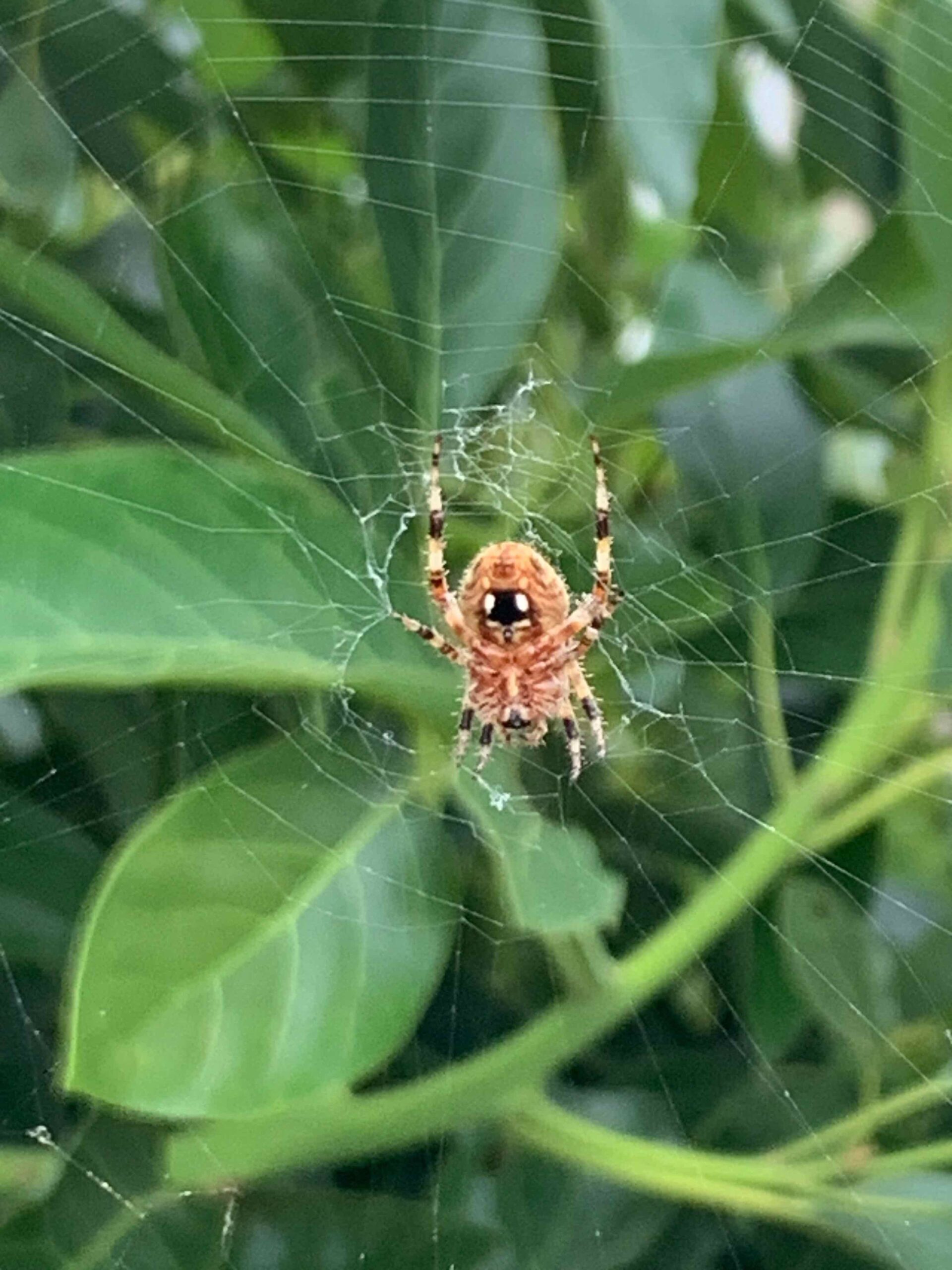
Until next year, friend! For about 6 weeks, this lovely orb weaver rebuilt her web between the top of my dwarf orange tree and the power cables running to our house. Each evening before sunset, she would meticulously reweave her web, which by midnight would already be full of flies and the occasional honey bee. I haven’t seen her for a few days so my guess is she either returned to being strictly nocturnal or, more likely, she mated, produced her offspring, and died. It was comforting to greet her each day when I came home from work. 

Links to the past

  • 1 year ago: Notes from the 2022 Library Marketing and Communications Conference Day 1 and Day 2
  • 6 years ago: One of the best photos I ever took 
  • 10 years ago: I still need to find out the answer to this mystery

Overheard online

Protip: browsing and borrowing from your local library can satisfy the shop therapy part of your brain without costing you money

ami_angelwings on Mastodon (h/t Dense Discovery)

burning star in space

It’s a mad world. Mad as Bedlam.

David Copperfield by Charles Dickens

Trifles make the sum of life.

David Copperfield by Charles Dickens

I don’t run the social media account for my university, but I do oversee the accounts hosted by the library. As Head of Outreach and Engagement, managing the various external (i.e., campus facing) channels is part of my portfolio. This is of course in addition to research and service, collection development, faculty liaison work, leading a department, and all the other “normal” academic librarian duties. Social media is only a tiny fraction of how I spend my time. 

That said, a recent article by the Chronicle, “This is One of the Loneliest Jobs on Campus” by Megan Zahneis made me feel seen. But before I get into it: have you said thank you to your social media manager yet today? Have you told them how much you respect and appreciate their work? Have you given them a bottle of wine? Go do that first. I’ll wait.

Drink bleach and die

“To manage an institution’s social-media accounts is to act as its voice to hundreds of thousands of people, and to take in those people’s thoughts, questions, and complaints in real time.”

When things are going well, you can feel like you’re on fire. The excitement of developing new content (yarr!), seeing people fall in love with it, watching engagement numbers rise… all of that can be thrilling. But just as quickly it can turn sour. I once posted an image of a new book from our popular reading collection that was about Trump’s legal troubles: I immediately found myself the target of MAGA trolls. They were not even our students! That didn’t make it any easier to read. I’ve internalized negative reviews of my organization, even though I know that’s absurd. When you’re the one creating and pushing out all the messaging, it’s difficult not to take it personally. 

Keys to the brand

“[Social media accounts are] the keys to your brand. Surprisingly often, those keys are held by a single person.”

In one survey cited, 48 percent of respondents were the sole individuals running social media accounts for their uni. Another 35 percents were on teams of two. While the article didn’t mention it, I would bet those 35% are much happier and well-adjusted than the other 48%. There’s solidarity in teams, not to mention the comfort in knowing that it’s not all on you to figure out. Creating content daily that is engaging, unique, up-to-date, and useful is … painfully difficult work. I’ve been doing this type of work for almost a decade, but even I have days where I’m at a complete loss for ideas. More often, though, it’s the lack of time that’s the killer.

I have been advocating for an assistant to my position for years, specifically someone with a few years experience creating content for the web. As the article notes, most of the people doing this work [well] are not 18-year olds and interns: they are professionals who have been working in higher ed social for years. Understanding internet culture, knowing how to critically follow and examine trends, being able to create content that matches the platform and algorithm you’re posting to, and being able to do all that within the limits of your institution’s mission and branding guidelines: that takes skills, knowledge, and experience. In an academic library setting, moreover, you also need to juggle the overlapping context of our own professional standards/expectations for how libraries “do” social media. 

“[Social media managers] are the Swiss Army knives of a college’s public-outreach apparatus, often incorporating copywriting, photography and videography, graphic design, marketing, and public relations into a day’s work.”

Collaborating from Day 1

“Our team — including social media — is involved at the outset of any planning, including the strategy for releasing those plans,” [Wilson] wrote.

I cannot count the number of times colleagues have come to me and said “Hey, we’ve just [done this thing]. Can you get the word out on social?” As if taking a photo and writing some copy is all you need to “get the word out.” Sure, I can do that, but it’s a waste of my time and won’t get you the outcome you think it will. Instead, as the person quoted above notes, loop in your social media leads from the start. Include them in the initial planning meetings. For most projects, if I’m involved from the beginning, I can develop a much more robust and interesting promotional campaign.

Or I can just Tweet about it.

image credit: European Space Agency on Flickr, cc-by 2.0

“I am just going outside and may be some time.”

Lawrence Oates, qtd. in Robert Falcon Scott, Diary, 16-17 May 1912.

When Facebook, Twitter, and Instagram launched, I was an early adopter. I remember when Facebook was limited to .edu email addresses, when Twitter mobile meant SMS, and when Instagram felt like weak-sauce Flickr.

Since the meteoric rise of the Big 3, I’ve been reluctant to get involved in other platforms. I’ve stepped back from social media more generally over the past few years, even before the towers of Twitter began to crumble. By 2019, I had deleted all my Facebook content and de-activated my Instagram account; and while I had set my tweets to auto-delete, I was still actively engaging with my Twitter community. The Elon take-, make-, and break- over pushed me over the edge and I stopped posting completely last spring. Many of my connections left the platform. Some are still there, but the exodus of so many is hard to ignore.

I am still debating whether to get back involved with Twitter, now that some of the dust has settled and those who stuck around are tweeting regularly again. In the meantime, I’ve joined Mastodon. I’m happy to be on a server hosted for library and museum folk. It’s definitely quieter. I’m still not sure I’m doing it right. I do love the content warnings. Even if it’s for things I’m OK with (e,g., politics), it makes it easier to skip over if I’m not in the mood. 

In any case, you can find me glammr.us/@johnxlibris. See you there!

Garden updates

The winter garden is in! I have carrots, golden beets, celery, Tokyo bekana, onions, garlic, cabbage, spinach, and potatoes. The okra, peppers, and watermelon are still trucking along as well (such is garden life in a coastal zone 10b). In planter trays I have fledgling cauliflower and Brussel sprouts, but they are slow-going and I’m starting to suspect I’ll need transplants.

What I’m reading

We are not supposed to live like this by Erin Remblance

“How can we care about species loss when we cannot name the species that live in our own community?”

My Saturday self versus my Sunday self by Tom Ellison

“…with the tail of Godzilla, the tentacles of Cthulhu, and the politics of Elon Musk.”

xQc is stealing content by LegalEagle

This is a fascinating rumination on the possible legal outcomes for YouTube reaction videos.

Links to the past

  • 1 year ago: On arm twisting and outreach work. I”t’s like that meme about everyone’s reaction when the social media person shows up to your office: Shit. Shit. Shit.” 
  • 6 years ago: Learning to live with it. An important life lesson was learned that day.
  • 10 years ago: Did I mention… It’s been a decade since I started my first “capital L” librarian job!

Overhead online

“my perpetual advice to new university students: go the fuck to class and go the fuck to bed. almost all student crises stem from not doing those two things”

abadidea on Mastodon